subscribe to the RSS Feed

Thursday, May 24, 2012

Dr. Seuss in Middle School

Posted by Cindy on March 2, 2012

Happy Birthday, Dr. Seuss!  In honor of his birthday, some of my blogging friends and I would like to share some fun Dr. Seuss-themed lessons with you.  My post encourages you to pull out Dr. Seuss with your older children.  The content of so many Dr. Seuss books is far more rich than you might imagine!

Our family recently read The Sneetches as one of our literature-based character lessons.  What a fantastic book for teaching about the Christian character trait of acceptance – knowing that every single person has been made in the image of God no matter how they look.

The story:

The Sneetches have divided themselves into two groups – those who have stars on their bellies and those who have not.  Those who have stars think of themselves more highly than they ought, while those who don’t have stars think of themselves more poorly than they ought.  Mr. McBean soon rolls into town promising to make everyone part of “the” crowd.  After a day full of everyone paying lots of money to continually change the group to which they belong, Mr. McBean is left wealthy and the Sneetches are still separated into two confused groups.  They finally come to the realization that looks shouldn’t keep people from being friends.

Our lesson:

1. I started the lesson by having my children think about how people are often “sorted” in society by such characteristics as their clothes, shoes, hair styles, skin colors, cars they drive, houses they live in, whether or not they wear glasses, what scores they make on tests, and so on.

2. We talked about the impact these “standards” have had in the past.  For example, how slavery and segregation occurred because of skin color.

3.  We talked about the lesser (but more personal) impact these “standards” have had in our own lives.  Have we ever been judged at co-op or church, for instance, because of an outward appearance?  Have we ever seen anyone judged in this way?  Have we ever judged someone over such things?

4.  We read a few Bible verses:

  • 1 Samuel 16:7b  “The Lord does not look at the things man looks at.  Man looks at the outward appearance, but the Lord looks at the heart.”  (What should we be concerned about?)
  • Psalm 139:14  “I praise you because I am fearfully and wonderfully made; your works are wonderful, I know that full well.”  (Isn’t everyone made in the same way?)
  • 1 Peter 3:3-4  “Your beauty should not come from outward adornment, such as braided hair and the wearing of gold jewelry and fine clothes. Instead, it should be that of your inner self, the unfading beauty of a gentle and quiet spirit, which is of great worth in God’s sight.”  (Does any of the outward stuff really matter?)
  • John 7:24  “Stop judging by mere appearances, but instead judge correctly.”  (Do we decide whether someone should be our friend based on what they wear or how they act?  Do we worry about their hairstyle or whether or not they love the Lord?)

5.  Finally, I pulled out some plastic toys (animals or people would work fine.)  I asked the kids to think of an attribute and sort the toys.  For example, we sorted our people into groups of those who wear hats and those who don’t.  We talked about the silliness of considering that the group wearing hats were somehow better than the other group.  They obviously weren’t anymore capable, loveable, friendly, etc. than the group not wearing hats.  There was no clear distinction other than the hats.  To decide whether or not someone is more acceptable simply because they wear a hat (or not) is a ridiculous idea – as it is in real-life, too.

We’ve read other books in the past that emphasize this same concept (with a Christian flair), too:

More middle school (and above) lessons:

We love Dr. Seuss books and I’ve come across all sorts of ideas for using the books with older kids – middle school and above.  Enjoy!

Please visit my friends who have also posted great lessons for the Dr. Seuss Birthday Blog Hop!

Ami from Walking by the Way

Amy from Milk and Cookies

Jenn from Daze of Adventure

Jimmie from Jimmie’s Collage

Karin from Passport Academy

Kendra from Preschoolers and Peace

Tricia from HodgePodge

Armor of God Object Lesson

Posted by Cindy on January 16, 2012

On Fridays, I attempt to plan a simple object lesson to go along with Bible study.  Since we have been studying knights of the Middle Ages lately, I thought a lesson on the Armor of God made a nice tie-in.

The lesson is quick, but powerful.

Materials:

  • two oranges
  • a glass bowl large enough for two oranges to be completely submerged
  • water
  • Bible

Read Ephesians 6:10-17

Finally, be strong in the Lord and in his mighty power. Put on the full armor of God, so that you can take your stand against the devil’s schemes. For our struggle is not against flesh and blood, but against the rulers, against the authorities, against the powers of this dark world and against the spiritual forces of evil in the heavenly realms.  Therefore put on the full armor of God, so that when the day of evil comes, you may be able to stand your ground, and after you have done everything, to stand. Stand firm then, with the belt of truth buckled around your waist, with the breastplate of righteousness in place, and with your feet fitted with the readiness that comes from the gospel of peace. In addition to all this, take up the shield of faith, with which you can extinguish all the flaming arrows of the evil one. Take the helmet of salvation and the sword of the Spirit, which is the word of God.

Talk about what each piece of armor stands for and how it helps us stand against the devil.

Ask your children to pretend to put on each piece of armor as you discuss how that particular piece might help them throughout their day.

Place both oranges in the bowl with their “armor” on.  (In other words, keep the skin on both oranges.)  Talk about how the oranges are floating, or “standing firm” in the water.

Little by little, begin peeling away some of the “armor” (skin) of one of the oranges.  You might peel off a chunk and say something like, “Uh oh, this orange forgot to put on his belt of truth.  When someone says something ugly about him today, he might believe it.  If he believes that lie, instead of the truth that he’s wonderfully made, he might not stand as firm in the water.”  Place the orange back in the water and notice that, although it doesn’t sink completely, it begins dipping further in the water than the orange still wearing all its armor.

Continue on this way, peeling back a little at a time, talking about a new piece of armor the orange forgot to put on, talking about how that might affect his day, and then placing the orange in the water to see it sink more and more each time.

By the time you remove all of the armor, the orange will completely sink.  It is not able to “stand” at all.

Challenge your children to think purposefully each day about putting on each piece of armor.  Maybe you could even pretend to put on each piece together every morning.  When I purposefully try to put on my own armor, I know I’m able to stand more firmly against the devil’s wily schemes.  I bet kids can, too!

Petition to Cover Up Cosmo

Posted by Cindy on January 7, 2012

Remember my local efforts to clean up the magazine racks?  I started by taking the offending magazines up to the customer service desk, then got in trouble for trying to protect my children so I answered back with a letter to the editor and a meeting with the manager of my local Walmart.  Changes were made in my little community!  It’s not perfect, but better.  At least a little.

Apparently, I’m not the only one who’s frustrated in the check-out lines.  WooHoo!!  A nationwide petition has been started to either clean up or cover up Cosmopolitan!  When I signed the petition this morning, over 18,000 people had already added their names!  Will you??

Let’s see what a difference our voices can make!!

Sign the petition here

Teaching Values Day 1 – Fruit of the Spirit Trees

Posted by Cindy on November 7, 2011

Welcome to Day 1 of my series 10 Days of Teaching Values!

Over the next couple of weeks, I’ll be taking part in the Heart of the Matter’s 10 Days of… Blog Hop.  My posts will focus on creative ways to teach values (or character training) to your children.  My prayer is that you and I will both be inspired (or re-inspired) to train our precious children in the way they should go with methods that reach deep to encourage and motivate their souls.

I hope you’ll stop in every day over the next two weeks (weekdays only) to not only get fresh ideas, but to encourage me with your comments and fresh ideas as well.

Photobucket

First, just in case you’re new to my blog, I’ll take just a minute to introduce myself. I’m Cindy West, wife to Steve and mom to Mahayla (14), Caleb (11) and Eli (4). We live on a cattle farm in Central KY which is an awesome setting for tons of homeschooling opportunities and rambunctious students! I own Shining Dawn Books where you can find my NaturExplorers studies and other “living” curricula. I love encouraging homeschooling moms to embrace every moment with their children by making their time together meaningful and enjoyable.

More About My Family

More About Me

On to today’s inspiration!

Fruit of the Spirit Trees

But the fruit of the Spirit is love, joy, peace, patience, kindness, goodness, faithfulness, gentleness and self-control. Against such things there is no law.

Galatians 5:22-23

The Fruit of the Spirit is our “go-to” list of virtues as Christians.  We should strive to exuded each of these traits in everything we do!  Do we mess up?  Sure!  That’s part of the learning process – and thank God for His sweet mercy day in and day out as we fail!

One tried and true method I’ve used with each of my three children to help them understand and begin to display these values is a Fruit of the Spirit tree.  As early as the age of three or four, whenever I notice that the “fruits” need a little, ahem, fine tuning around the house, we stick a branch in a jar and have great fun catching each other being kind, peaceful, gentle and so on.

Beforehand, I’ve prepared little fruits tied to strings that get hung on the branches when someone has been caught.  There’s never a competition between kids to see who can gather the most fruit, but instead it’s a cooperative effort to see the good in one another, be good to one another and watch our family tree hang heavy with fruits as a result.

When one child needs a little more encouragement (like the four year old recently), the tree will be all about him.  In this instance, as often as we were able, we made a big deal about the values he was displaying and let him put his fruits on the tree.  At the end of the day, we counted the fruits together.  His goal the next day was to see if he could gather even more fruits than the day before.  After about a week, he had begun a pleasant habit which replaced a not-so-pleasant habit and we not longer needed the tree.

Old or young, every time I’ve pulled out the Fruit of the Spirit tree in our home, positive character has resulted.  It’s so easy, too!

How to Make:

  • Place a tree-shaped stick in a jar/bucket of beans/rice/rocks.
  • Cut out fruit shapes from construction paper, card stock, foam sheets or anything else you like. (The fruit shapes in my photo were prepared shapes I found several years ago at a dollar store.)
  • Punch a hole at the top of each fruit and loop a ribbon, yarn or string through it to become a hanger.
  • For very young children, I don’t write anything on the fruits.  We simply talk about each value as its displayed and the child hangs any fruit of his choosing.  For young readers, write one value on each of the fruits so that you have at least one per Fruit of the Spirit.  When a particular value is displayed, they find the correct fruit to hang on the tree.  For older children, place a list of the Fruits of the Spirit near the tree along with the blank fruits and a marker to create their own as a fruit is displayed.

That’s it!  What are you waiting for?  You could have new, wonderful habits started tomorrow!

While not necessary, I know many of you like to find fun extras to reinforce your lessons, or actual lessons to help you specifically teach the Fruits of the Spirit.  I have included some of both in the widget below for your convenience.


Be sure to visit these wonderful ladies during our 10 days adventure between November 7th-18th!

10 days of Character Studies | Confessions of a Homeschooler
10 days of Christmas Countdown Ideas | Milk & Cookies
10 days of Creative Writing | Chocolate on My Cranium
10 days of Crockpot Meals | The Happy Housewife
10 Days to a Godly Marriage | Women Living Well
10 Days of Growing Leaders | Mom’s Mustard Seeds
10 Days of Homeschooling High School | Weird Unsocialized Homeschoolers
10 days of I Wish I Had Known | Fruit in Season
10 days of Keeping Your Marbles | The Tie That Binds Us
10 days of Kid-friendly Food | Planner Perfect
10 Days of Language Arts Lesson Planning | Jimmie’s Collage
10 Days of Learning Apps | Daze of Adventure
10 Days of a Mason Jar Christmas | Cajun Joie de Vivre
10 Days of More JESUS in Christmas | Preschoolers and Peace
10 Days to a Peaceful Home | Raising Arrows
10 Days of Raising a Life-Long-Learner | Bright Ideas Press
10 days of Science with Math | Blog, She Wrote
10 days of Teaching Values | Our Journey Westward
10 days of Winning your Child’s Heart | I Take Joy

Teaching Values with Literature – Day 2

Posted by Cindy on

Welcome to Day 2 of my Heart of the Matter 10 Days of… series on Teaching Values in your homeschool!

Today I’m writing about one of my very favorite topics – living literature!  There are SO many ways you can use literature to encourage good values in your children – and teach about the consequences of poor values as played out in the lives of book characters.  Whether you’re teaching preschoolers or high school students, living literature is a gold mine for values training.

Yesterday, I mentioned the Fruits of the Spirit as defined in Galatians 5:22-23 as our “go-to” list of values for training our children.  And, while that is certainly the list I focus on most in my home, there are plenty of other values which are important to instill in our children – gratefulness, truthfulness, hospitality, thriftiness, punctuality, attentiveness and many more.

You can find a wonderful list of virtues along with an amazing set of Bible and teaching ideas for each virtue at Home Life Ministries.  Don’t miss this website!  Also, while I’m not entirely sure of the content of The Virtues Project website, they have three printable posters of virtues you might be interested in.

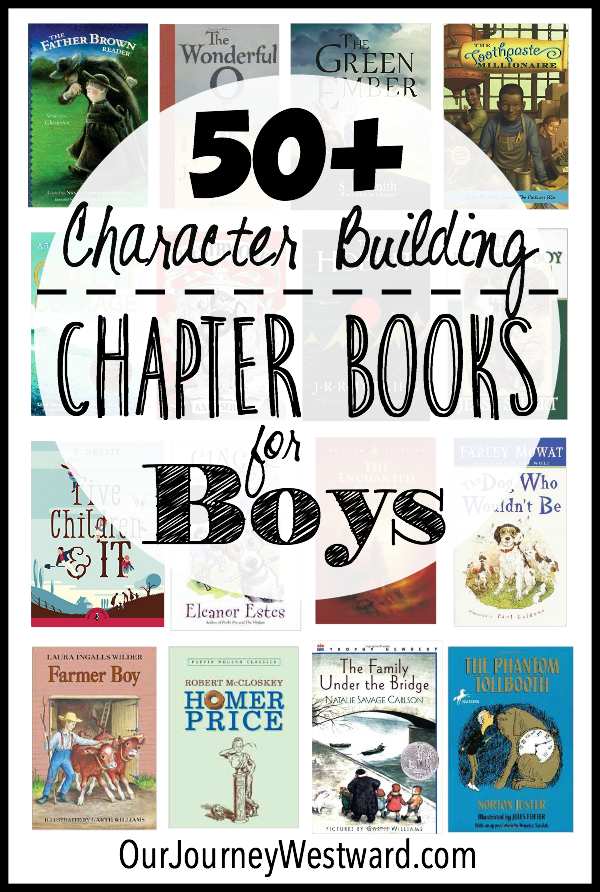
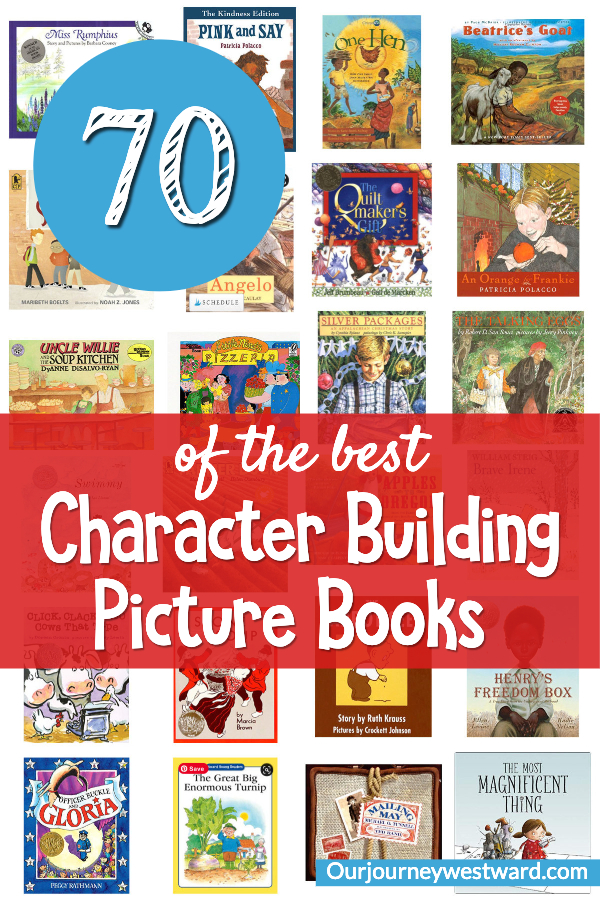
Considering all the possible values to reinforce, it would be nearly impossible for me or anyone else to give you a comprehensive list of the best books to use for each and every value. While some websites and books set out to get you started on the practice of using literature for character training (see below), my intent is to show you how I take just about any book we read and use it for at least some character training.

A Sample Lesson

Let’s use just any ol’ non-secular book you might find at the library…The Three Little Pigs.  You know the story, right?  After reading the story with my children (if I was intending to use it as for part of a values lesson and not just sweet reading time), I would start asking open ended questions.  Typically, I would only focus on one topic per book per day.  In other words, I wouldn’t try to cover every single character flaw at one time.

Two possible character discussions:

Topic/character flaw = being mean

What do you think about the wolf?  Why do you think he was called the ‘Big Bad Wolf’?  I wonder what prompted the wolf to be so mean?  You think he was just hungry?  Okay, what could the pigs have done to help him?  When people are mean, should we try to help them?  What if they don’t want to be helped by us?  Is there ever a time when we should run away from people instead of helping them? (Stranger talk!)

Topic/character flaw = laziness

Tell me what you think about each of the houses that the pigs made.  Whose house stood strong against the wolf?  Why?  What did the other two pigs want to do rather than build strong houses?  Do you think they were prepared for the troubles that came their way?  What other troubles might they not have been prepared for?  What does God tell us about being lazy in the Bible?  Is there a time to play and relax?

There are obviously other discussions you could have based simply on this little picture book, too!  And, just about any book you find will lend itself to character building discussions!

Photobucket

One other thing I might mention… When I’m preparing for a character talk (or when one comes out of nowhere), I’ll browse through my copy of For Instruction in Righteousness.  It prepares me with Bible verses, Bible stories and ideas to bring home the point on a huge number of “character flaws”.  It’s been one of the most used book in my home!  In fact, I’m planning to write a whole post on how I use this book as part of our values training later in this 10 Days series.

Some Great Resources

The following websites offer wonderful collections of character building literature:

Grace and Truth Books Character Building Literature List

Lamplighter Publishing

Below are some book series which we have found to be fantastic for character building:

Hero Tales

Any Missionary Story – Some of our favorites include Bruchko, The Hiding Place, A Chance to Die, George Muller: The Guardian of Bristol’s Orphans, and Gladys Aylward: The Adventure of a Lifetime.

Miller Stories (from a conservative, Mennonite viewpoint, but great morals)

Pearables (occasionally legalistic, but many good discussion points)

Bob Schultz Books – Boyhood and Beyond: Practical Wisdom for Becoming a Man and Created for Work: Practical Insights for Young Men

You might find this large selection of Aesop’s Fables helpful since every story has an obvious moral to discuss with your children.

(Short fables like these are good for assignments, too, where you ask your child to develop her own moral or write/act out a new version where the character makes better decisions.)

Online Collection of Aesop’s Fables

The books in the widget below contain either book lists of great literature (with a moral) for all ages, or are collections themselves of literature selections.

I hope you’ll join me tomorrow as we discuss teaching values through service and leadership opportunities!

Be sure to visit these brilliant ladies during our 10 days adventure between November 7th-18th!

10 days of Character Studies | Confessions of a Homeschooler
10 days of Christmas Countdown Ideas | Milk & Cookies
10 days of Creative Writing | Chocolate on My Cranium
10 days of Crockpot Meals | The Happy Housewife
10 Days to a Godly Marriage | Women Living Well
10 Days of Growing Leaders | Mom’s Mustard Seeds
10 Days of Homeschooling High School | Weird Unsocialized Homeschoolers
10 days of I Wish I Had Known | Fruit in Season
10 days of Keeping Your Marbles | The Tie That Binds Us
10 days of Kid-friendly Food | Planner Perfect
10 Days of Language Arts Lesson Planning | Jimmie’s Collage
10 Days of Learning Apps | Daze of Adventure
10 Days of a Mason Jar Christmas | Cajun Joie de Vivre
10 Days of More JESUS in Christmas | Preschoolers and Peace
10 Days to a Peaceful Home | Raising Arrows
10 Days of Raising a Life-Long-Learner | Bright Ideas Press
10 days of Science with Math | Blog, She Wrote
10 days of Teaching Values | Our Journey Westward
10 days of Winning your Child’s Heart | I Take Joy