
What Makes a Pickle Sour? Simple Sour Food Science
Milk isn’t sour like plain yogurt, and a fresh cucumber tastes nothing like a sour pickle. What changes? Sour food science starts with familiar ingredients, but the explanation includes tiny living things that make acid as they feed.
Pour a glass of lemonade and listen to the No Sweat Nature Study Podcast together. Mrs. Cindy connects the work of bacteria with the tastes we recognize, including why a spoonful of sugar can soften sourness without removing the acid.
Nature Study about Acids and Bases
Who remembers what turns milk tangy or gives a pickle its sour bite? Take turns asking these questions, and see which answers everyone agrees on before checking.
- What acid gives lemons their sour taste?
(Citric acid gives lemons their sour taste.) - Which group of fruits includes lemons, limes, oranges, and grapefruits?
(Lemons, limes, oranges, and grapefruits belong to the citrus fruit group.) - How does vinegar make a cucumber taste sour?
(The cucumber absorbs acid from the vinegar mixture as it soaks.) - What do dill and garlic add to a pickle?
(Dill and garlic add flavors other than the sourness supplied by acid.) - How do bacteria make cucumbers sour during fermentation?
(Bacteria break down sugars in the cucumbers for energy and release lactic acid.) - What natural sugar in milk provides energy for yogurt-making bacteria?
(The natural sugar called lactose provides energy for yogurt-making bacteria.) - How does your brain receive information about a sour taste?
(Sour-sensing taste cells communicate with nerves, which carry signals to the brain.) - Does adding sugar to lemonade remove its acid?
(Adding sugar does not remove the acid, but the sweetness can make the sourness less noticeable.)
Nature Study about Acids and Bases Video Class
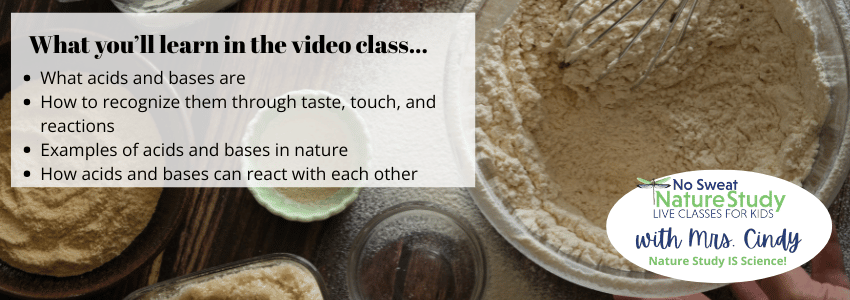
The acids in lemons and yogurt are only the beginning. The Acids and Bases in Nature video class expands the investigation to chemistry found in soil, plants, and everyday life. What makes something an acid or a base? How can they react with each other, and why do some plants grow better in certain soils? These connections give familiar gardening observations a scientific explanation.
Guided nature journaling brings the comparisons together on one page. Sketching and labeling examples, noting reactions, and connecting soil conditions with plant growth help make the chemistry easier to understand and remember. Families can learn together, with Mrs. Cindy providing the explanations and journaling guidance. The class is included in No Sweat Nature Study membership. Use code NOSWEAT for $10 off the first quarterly subscription payment.
Let Mrs. Cindy Hear Your Answer!
Visit the podcast page for Mrs. Cindy’s latest question, then leave her a voice message with your answer. Parents are welcome to join in, too! Your recording could be featured in an upcoming No Sweat Nature Study Podcast.
Please leave a rating or a review on your podcast app! It helps the podcast to show up for more people…which means more families can enjoy science through the wonderful lens of nature study! Thank you!
Make Science Meaningful and Fun
Experience a free No Sweat Nature Study class to see how easy and engaging science can be.
Kid-friendly science through the lens of nature study
Creative nature journaling with every lesson
Flexible and fun for the whole family