subscribe to the RSS Feed

Wednesday, February 8, 2012

Bean Classification

Posted by Cindy on January 3, 2012

Remember the candy classification post from a couple months ago?  My logic classes at co-op did a similar activity with 15-bean soup mix.

Before jumping into the activity, we talked about plant and animal classification.  I showed them a pictorial example of how animals are classified and then further classified until each animal is eventually in it’s own category.

Each student was given a small pile of beans – approximately 50-60 beans with at least one of every variety in the pile.  (I allowed my middle school group to work in teams of two or three students.)

I challenged them to create a classification system for their beans, making sure each bean ended up in its own category in the end.  They were asked to use any characteristics they wished to separate the beans, with only two rules:

  • use creative characteristics (not simply colors)
  • don’t break every bean down into its own group in the first step

With each new separation based on a new characteristic, they were expected to note it on a chart so that, in the end, they could tell me the full “taxonomy” of each bean.

Ex: Bean -> small -> round -> flat -> green -> split pea

Each classification chart was unique because each student (or group of students) began with different characteristics of separation.  So, when one person first separated the beans into large and small groups, another student might have used the categories of dark and light or oval and round.

I used this opportunity to discuss how Carolus Linnaeus “invented” the modern classification system of plants and animals in the 1700′s, but scientists even today don’t always agree about exact placements in the taxonomy.

We decided to create a “scientists roundtable”.  Everyone went around the table and told the first characteristic they chose to separate the beans.  If four out of five people (or groups) all used the characteristic of shape, we voted to make that the “official” first level of characterization.  If two people used one characteristic and three people used another, each person had to “argue” their case for using that characteristic and then we all voted as to the “official” characterization.  We continued through each level of the taxonomy in this manner until we came up with an “official scientist certified bean taxonomy”.

The kids all loved this activity!  Besides science and logic, it was a great lesson in chart making, debate and cooperation!

Fun with Leaves

Posted by Cindy on November 21, 2011

I {heart} Pinterest!  Seriously.  It may very well be the greatest invention on the planet.  Okay, the greatest recent invention.

Through Pinterest, I found (and archived) some fun leafy art lessons to go along with our botany studies this autumn.

While we didn’t get to all the wonderful ideas – this autumn – we found time for two of them.  The first was a lesson about layering oil pastels from Art Projects for Kids.

And the second was a fun shaving cream transfer painting from Little Wonder’s Days.

Speaking of botany, the last couple of weeks have been full of wonderful botany related field trips.

At Hallway Feeds, we were able to view the creation of specialized animal feed from start to finish.  What an amazing and utterly detailed process.  The kids were even allowed to EAT some of the feed!

At Color Point Nursery, we walked through state-of-the-art greenhouses and learned the process of growing and shipping plants on a very large scale.  At the time, there were 600,000 poinsettias set to ship out soon.  This place was huge!

I’ve lived in Kentucky my entire life and have never been to Churchill Downs.  My father-in-law owns a thoroughbred racehorse that happened to be racing at Churchill Downs last week.  Even though “our” horse came in 6th, we had a great time taking in all the sites and sounds – which can certainly count toward biology hours, right?

Enjoy your Thanksgiving week!

Pond Water Study

Posted by Cindy on November 5, 2011

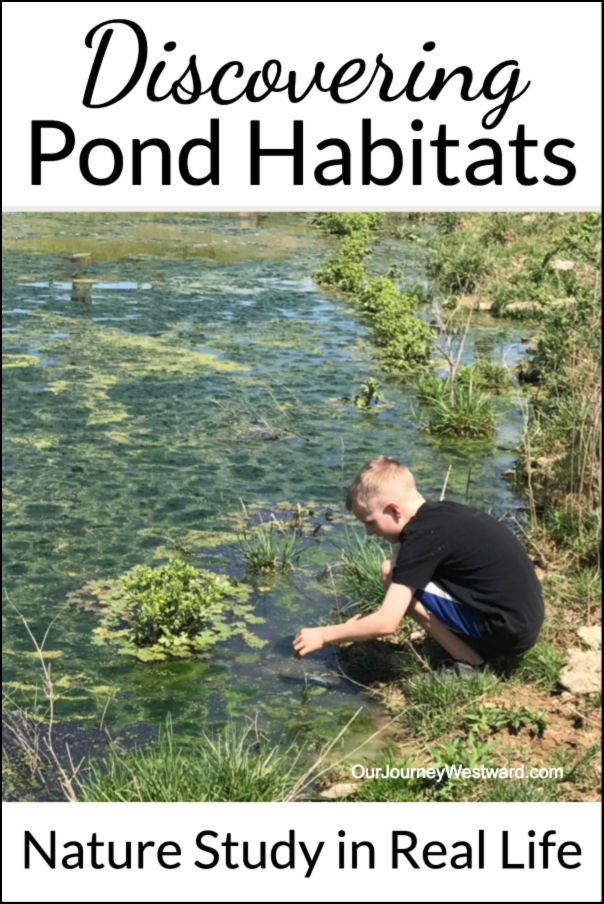
What is this??  A bowl of wonderful, living pond water!

Even though you can’t see anything living with the naked eye, there’s a world of life waiting to see under a microscope!

Mahayla has been studying about the Kingdoms Monera and Protista in her biology.  And, as you know, Caleb has been studying all sorts of plants, including pond plants.  We were amazed at all the life we found in that small bowl of pond water!  If you have a microscope, create a few slides with “fresh” pond water and see for yourself!

When studying pond water, you might also enjoy the other activities suggested in the NaturExplorers study, Peaceful Ponds!

Photobucket

Fungi Study

Posted by Cindy on November 4, 2011

I told you I’ve been slacking on my posts!  Four botany study posts in four days doesn’t mean we’ve been studying botany in such depth every day.  In fact, each topic took us at least a week to cover.  Today’s post is about one of the lessons spent learning about fungi.

Photobucket
After some activities from A Fungus Among Us and Lyrical Life Science, Caleb was asked to go on photo walk.  His goal was to find and photograph as many samples of as he could.  With Eli (our little nature detective) helping, Caleb was able to photograph over 20 fungi varieties!  Below are some of the most interesting photos.

Besides science and photography, this lesson was stretched to include writing and computer skills, too.  I posted last week about the notebooking page he created.

Of course, with boys, a nature walk never ends up being entirely about the topic at hand.  They always find exciting extras…

What nature studies have been keeping you busy this autumn?

Candy Math and Science

Posted by Cindy on November 2, 2011

Got candy?  We do, and we’re having so much fun using it during living math lessons!  This year we added a little science classification to the mix, too.  Fun!  Fun!  Fun!

Math

My preschooler made a concrete graph with his candy.

He had to sort the candy into groups before we could graph them and he created the group names all by himself – gum, chocolate, suckers, crunchy, chewy and hard.

After completing all sorts of averages based on different groupings of the candy, Caleb (6th grade) created this graph using Excel.  (This is another great computer integration activity for those of you who’ve asked me to share more about how we use the computer in our homeschool!)

Science

Not a great picture, but I wanted you to see the entire concrete classification system my 6th grader made with his candy.  {A classification system is otherwise known as a taxonomy, which we compared to the classification system for plants and animals.}

Beginning with the main group of ‘candy’, Caleb decided how to break the large group into two smaller groups. He came up with ‘chocolate’ and ‘non-chocolate’ as his descriptions.

For each new category, he continued breaking the groups down into two new categories until he ended up with each specific type of candy in it’s own pile.

Finally, we walked through each candy’s “classification”. An example from our taxonomy chart -Candy; chocolate; bright wrappers; made with peanuts; made with peanut butter, crunchy, Butterfinger. Besides being a science activity, this also fits into the category of logic!

Check out some other candy math lessons we’ve posted in the past, too!