
Why Are Flowers So Colorful? A Lady Bird Johnson Nature Study
Why are flowers so colorful? The answer has much more to do with plant reproduction than simply making a garden look beautiful. Flower pigments, reflected light, and even patterns invisible to human eyes can all play a part in helping flowers attract the animals that pollinate them.
Listen to this No Sweat Nature Study Podcast episode with your children to learn how flower color works, why bees can see patterns that humans can’t, and how color, shape, scent, and other flower traits can help connect plants with their pollinators. It’s a colorful science lesson with plenty of interesting details to listen for along the way.
Lady Bird Johnson’s Wildflowers Nature Study
Turn listening into a little game! See how many answers everyone can remember without going back to the episode, or use a few of the questions to get a fun conversation going about flower colors and pollinators.
- What happens to light when we see the color of a flower?
(Some colors of light are absorbed by the petals, while others are reflected toward our eyes.) - What are pigments, and how do they affect a flower’s color?
(Pigments are substances inside flower cells that interact with light and help determine which colors we see.) - What is pollination?
(Pollination is the transfer of pollen to the part of a flower where it can help begin the process of making seeds.) - How can a flower’s color help with pollination?
(A flower’s color can make it easier for pollinators to notice and visit the flower.) - What kind of light can bees see that humans cannot?
(Bees can see ultraviolet light, or UV light, which human eyes cannot see.) - What are nectar guides?
(Nectar guides are ultraviolet markings on some flowers that can help direct pollinators toward the center of the flower, where nectar and pollen are often found.) - Besides color, what are some other flower features that can influence which pollinators visit?
(A flower’s shape, scent, nectar or pollen, location, and blooming time can all influence which pollinators visit.) - Why are the flowers of many wind-pollinated grasses smaller and less noticeable than colorful wildflowers?
(Because wind carries their pollen, grasses do not need showy flowers to attract animal pollinators.)
Keep Learning with Mrs. Lady Bird’s Wildflowers
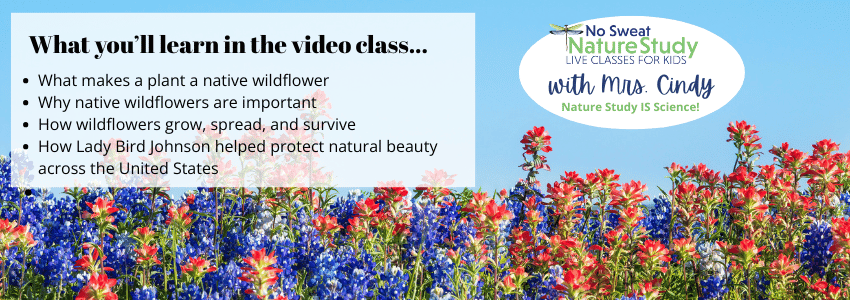
Flower color is just the beginning of what there is to notice about wildflowers. In the Miss Lady Bird’s Wildflowers No Sweat Nature Study video class, children will learn what makes a wildflower native, why native plants are so valuable to pollinators and habitats, and how Lady Bird Johnson encouraged people across America to protect native wildflowers.
The class gives children a chance to take the science further while creating a nature journal page alongside Mrs. Cindy. Miss Lady Bird’s Wildflowers is available through No Sweat Nature Study, along with more than 200 recorded science lessons for grades 1–8. Use code NOSWEAT for $10 off the first quarterly subscription payment.
Your Turn to Join the Podcast!
Have something to say? Head to the No Sweat Nature Study Podcast page to find the current call-in question and leave a voice recording. Mrs. Cindy may choose your answer to share in an upcoming podcast episode!
Kids and parents are both welcome to participate, so think about your answer, hit record, and have some fun being part of the show.
Please leave a rating or a review on your podcast app! It helps the podcast to show up for more people…which means more families can enjoy science through the wonderful lens of nature study! Thank you!
Make Science Meaningful and Fun
Experience a free No Sweat Nature Study class to see how easy and engaging science can be.
Kid-friendly science through the lens of nature study
Creative nature journaling with every lesson
Flexible and fun for the whole family