
A Blue Jay Nature Study in Food Storage and Survival
A blue jay can fly away with several acorns in its throat and another in its beak. That’s quite a load for a bird that still has to hide its food! A blue jay nature study starts with this familiar backyard bird and leads to questions about food storage, seasonal survival, and memory.
Listen to the No Sweat Nature Study Podcast with your family to follow an acorn from an oak tree to a blue jay’s hiding place. Mrs. Cindy explains how jays carry their harvest and what scientists have learned about their ability to remember where they put it.
Blue Jay Nature Study
Who remembers how a blue jay carries its acorns? Take turns asking these questions and see which answers the family can piece together!
- What kind of tree produces acorns?
(Acorns grow on oak trees.) - What is inside an acorn that helps a new oak tree begin growing?
(An acorn contains a tiny beginning plant and stored food to support its early growth.) - How does a blue jay break open an acorn?
(A blue jay holds the acorn steady with its feet and strikes the shell with its beak.) - Why might a blue jay find fewer acorns on the ground as the months pass?
(Other animals eat the acorns, some acorns begin growing, and others decay.) - What does caching mean?
(Caching means storing something for later use.) - Why does a blue jay hide some acorns instead of eating them all right away?
(A blue jay hides acorns to have food to eat later.) - How can a blue jay carry several acorns at once?
(A blue jay can hold several acorns in its stretchable throat and carry another in its beak.) - What did scientists observe that showed blue jays could remember their hiding places?
(The blue jays checked fewer empty spots than they would have if they had simply guessed where the food was hidden.)
Blue Jay Nature Study Video Class
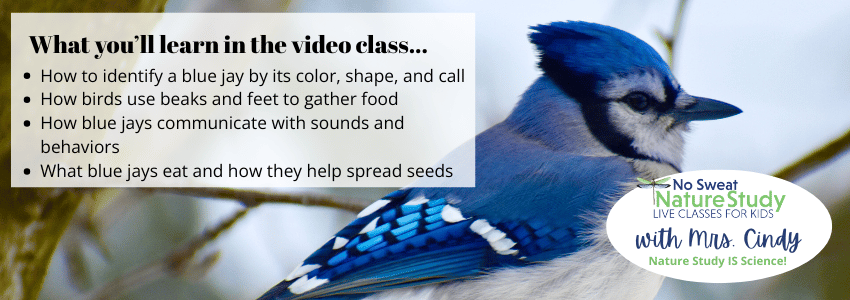
Acorn collecting is only one part of a blue jay’s busy life. The Blue Jays video class builds on the podcast with its calls, feeding habits, and behavior. Its beak and feet offer clues about how it gathers food, while its sounds communicate information that other animals notice.
Mrs. Cindy guides students in sketching and labeling a blue jay, using its crest, beak, wings, and tail to practice observing specific features. Notes about behavior add to a nature journal page that families can refer to when watching blue jays outdoors. The class is available through No Sweat Nature Study. Use code NOSWEAT for $10 off the first quarterly subscription payment.
Let’s Hear from Your Family!
Mrs. Cindy has a question for podcast listeners! Visit the No Sweat Nature Study Podcast page to see the current question and leave a voice message.
Parents are welcome to answer, too. Your family’s recording may be chosen for an upcoming episode!
Please leave a rating or a review on your podcast app! It helps the podcast reach more people…which means more families can enjoy science through the wonderful lens of nature study! Thank you!
Make Science Meaningful and Fun
Experience a free No Sweat Nature Study class to see how easy and engaging science can be.
Kid-friendly science through the lens of nature study
Creative nature journaling with every lesson
Flexible and fun for the whole family