
A Simple Creek Study for Kids
Welcome to my 10 Days of Nature Study series! Each day features a creative nature walk idea and a fun follow-up activity to help your family enjoy meaningful science through nature study.
Why Study Nature?
Nature study is much more than a pleasant walk outdoors.
When children spend time observing nature, they learn to notice details, ask questions, think critically, and make connections between what they see and what they learn in books. These observation skills form the foundation of scientific thinking.
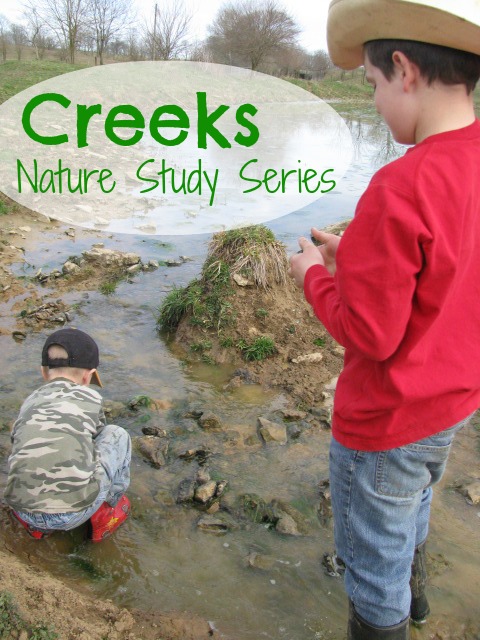
Today’s creek study is a perfect example. A simple walk beside a creek can teach children about geology, erosion, weathering, ecosystems, and the powerful forces that continually shape our world.
This post contains affiliate links.
Creek Study Activity: Searching for Signs of Erosion
A creek may seem peaceful as it flows through the landscape, but it is constantly changing the land around it.
The moving water of a creek is a powerful force of erosion. Over time, it wears away soil, reshapes creek banks, smooths rough rocks, and transports sediments from one location to another.
During today’s creek study, you’ll become nature detectives searching for evidence of erosion.
As you walk near (or even in) a creek, look for these clues:
Large Rocks with Smooth Surfaces
Look for large rocks with both rough and smooth areas. The smooth sections often show where water regularly flows across the rock, gradually wearing it down.
Rocks with Holes or Indentations
Some rocks may have small holes, dents, or bowl-shaped depressions. These features can form when dripping or swirling water slowly wears away the rock over many years.
Smooth, Rounded Pebbles
Notice the smaller rocks in the creek. Many of them are smooth and rounded because they have been tumbled and bumped against other rocks by moving water.
Piles of Small Rocks
Look for places where pebbles and gravel have gathered together. These deposits often form near bends in the creek, where the water slows and can no longer carry the rocks forward.
Exposed Tree Roots
Along the creek bank, you may see tree roots sticking out of the soil. This is another sign that erosion has washed away the soil around them.
As you explore, ask questions like:
- Why are some rocks rough while others are smooth?
- Where did these pebbles come from?
- What might this creek look like in ten years?
- Which signs of erosion do you notice most often?
Leave the nature journals at home today if you’d like. Simply enjoy observing and discussing what you find together. You might even collect a few rocks that show different stages of erosion to display at home.
Follow-Up Activity: Sweet Erosion Science
This simple experiment demonstrates how moving water can gradually wear away rocks.
Supplies
- 3 Lifesaver candies
- 3 clear jars
- Water
Directions
Place one Lifesaver candy into an empty jar.
This candy represents a rock sitting on dry land where very little weathering or erosion occurs.
Place a second Lifesaver into a jar containing ½ cup of still water.
This candy represents a rock sitting in a calm body of water, such as a pond.
Place a third Lifesaver into a jar containing ½ cup of water. Secure the lid tightly and shake the jar for 3–5 minutes.
This candy represents a rock in a moving creek. Each time the candy bounces against the sides of the jar, imagine a rock colliding with other rocks in the current.
Observe
Compare all three candies.
What happened?
The first candy remained nearly unchanged because there was little weathering or erosion acting upon it.
The second candy changed slightly because the water slowly dissolved its surface.
The third candy changed dramatically because it was exposed to both water and constant movement.
Just like the candy, rocks in a creek are continually worn down by flowing water and repeated collisions with other rocks. Over time, rough rocks become smooth pebbles.
Of course, real rocks don’t change in minutes! Nature often takes years, decades, or even centuries to accomplish the same results. Every smooth pebble you find during a creek study tells the story of countless days of moving water.
Read a Book or Two
Pair your creek study with a favorite book about streams, rivers, rocks, or freshwater habitats. Living books help children make meaningful connections between scientific concepts and the natural world they observe firsthand.


Continue Your Creek Study Adventures
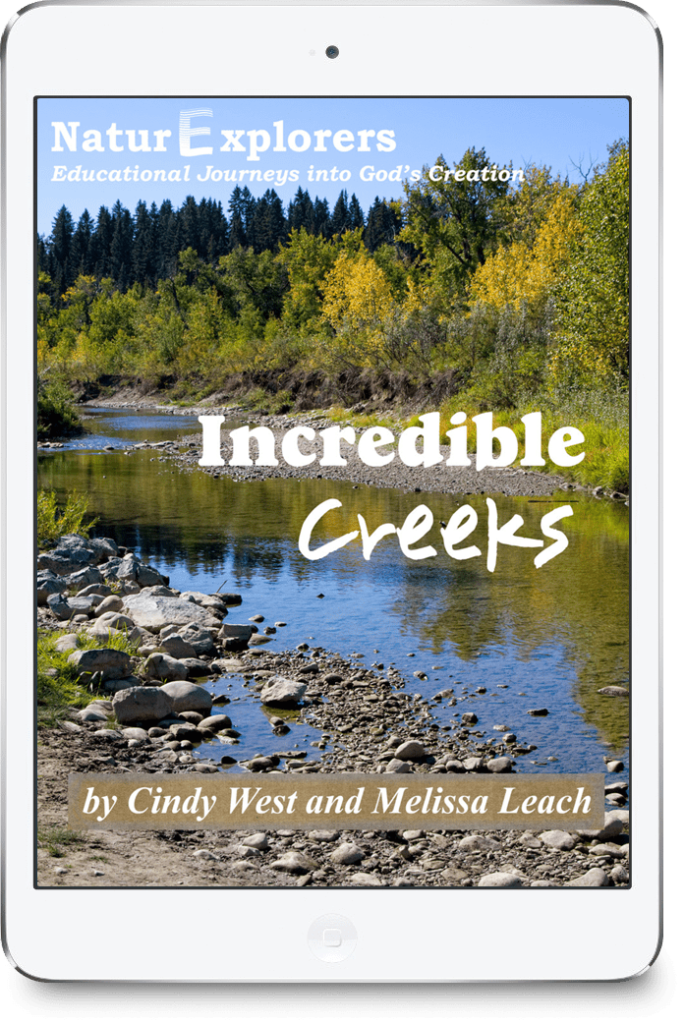
Today’s creek study is only a tiny glimpse of the creative activities found in the NaturExplorers Incredible Creeks study!
Through nature walks, hands-on science activities, living books, nature journaling, and cross-curricular learning, children discover the fascinating science of creeks and the ecosystems they support.
What signs of erosion did your family discover during your creek study today?
Ready for More Nature Study?
And if you’d like me to teach nature-based science directly to your children, be sure to check out No Sweat Nature Study, where we explore fascinating topics from earth science and weather to plants, animals, and space.

Make Science Meaningful and Fun
Experience a free No Sweat Nature Study class to see how easy and engaging science can be.
Kid-friendly science through the lens of nature study
Creative nature journaling with every lesson
Flexible and fun for the whole family
We have a creek in our back yard…and I love that my children spend so much time exploring and playing in it! Thank you for this post and the ideas, as well as book recommendations.
My kiddos love exploring the creek at one of the parks in our area…my dd especially loves the mud!
I wish we had a creek in our backyard! We do have a nice one nearby though. This looks fantastic.
I just purchased this study at the Cincinatti conference! I’m excited to get started!!! Maybe next week?! 🙂
I just found your blog through the 10 day series and I’m really I joying your great ideas for nature study.
Sarah, I’m sending you an updated version via the email that you provided here! The copy I sold at the conference had a little glitch in formatting and some of the notebooking pages don’t lay on the paper correctly. Watch for a new copy to come you way!
We love this exploration. We do it on a normal basis. Thanks for some new ideas. My kids love just looking and enjoying the water. XOXO
We also have a creek in our backyard! Thanks for the great study on erosion using the lifesavers! Brilliant!
yeah, we’re going to have to hold off on creekin’ it for a non-raining, non-lightning day, but I think this might be our next purchase!
Excited about this one! My friend bought it and I’m sure we’ll be using it in our nature club!!
Oh! This would be a good one before we head to Grama’s in the country.
Can’t wait to go to the cousins house where there’s a creek! Thanks for the fun ideas : )
A great visual experiment. Thank you!