
What makes late summer so special in nature?
Late summer is a wonderful time for a music of insects nature study. Plants are producing fruits and seeds, animals are taking advantage of plentiful food, and the shortening days are already beginning to signal seasonal change.
In this episode of the No Sweat Nature Study Podcast, we’ll talk about what makes late summer such an interesting time in nature and why so much is happening at once. We’ll also pay special attention to the insect sounds that become especially noticeable this time of year.
The Music of Insects Nature Study
Use these questions after listening to the podcast to review key scientific concepts from the episode. Younger children can answer them aloud, while older children may enjoy writing their answers in a nature journal or science notebook. Every answer is discussed directly in the podcast, so children can also listen again if they need help remembering a detail.
- What are many flowering plants putting more energy into producing by late summer?
(Many flowering plants are putting more energy into producing fruits and seeds by late summer.) - Why is late summer an especially important time for many animals to find food?
(Late summer is an especially important time for many animals to find food because seeds, fruits, nuts, nectar, and insects are plentiful.) - Why can plentiful food be especially important for migrating birds?
(Plentiful food can be especially important for migrating birds because migration requires an enormous amount of energy.) - What happens to the amount of daylight after the summer solstice in June?
(After the summer solstice in June, the amount of daylight begins decreasing a little each day.) - What does the scientific word photoperiod describe?
(Photoperiod describes the amount of light and darkness in a 24-hour day.) - What does the word part “photo” mean in photoperiod?
(The word part “photo” means light.) - How can changes in photoperiod affect plants and animals?
(Changes in photoperiod can influence seasonal events such as flowering, migration, reproduction, and preparation for colder months.) - Why do the sounds of insects often become especially noticeable in late summer?
(Insect sounds often become especially noticeable in late summer because large numbers of insects have reached adulthood by this point in the season.)
The Music of Insects Nature Study Video Class
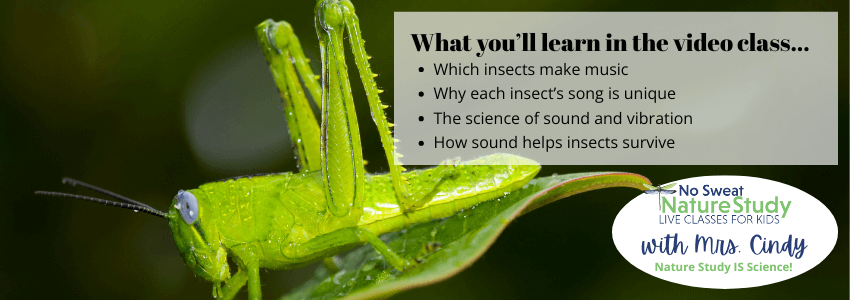
Late summer is one of the best times to listen for insect sounds, and our Music of Insects video class helps 1st-8th graders understand exactly what they’re hearing. The lesson focuses on crickets, grasshoppers, and cicadas, including how they produce sound, which body parts make it possible, and why these insects communicate through their familiar chirps, buzzes, and calls.
Engaging science instruction pairs with guided nature journaling throughout the lesson, giving children a creative way to record what they’re learning. The Music of Insects is included with No Sweat Nature Study, along with more than 200 recorded science lessons for grades 1–8 covering animals, plants, ecosystems, earth science, weather, space, physical science, and more.
Join the FREE Wonder of Thunder Event
Science and music come together for a special FREE event called The Wonder of Thunder! Mrs. Cindy of No Sweat Nature Study will teach how thunder is created and why it makes such a powerful sound, while Mrs. Mary of SQUILT Music Appreciation will help families hear how composers represent thunder through music.
The Wonder of Thunder takes place Monday, August 24 at 2:00 p.m. ET and is open to everyone. Families who can’t attend live can still enjoy the event later by pre-registering to receive the recording.
Share Your Answer on the Podcast!
NaturExplorers are invited to be part of the No Sweat Nature Study Podcast! Each season, a special call-in question gives listeners the chance to share their own experiences and ideas. Click below to record an answer, and your voice may be featured in an upcoming episode.
Click here and scroll to the bottom of the page to find the voice recorder.
Please leave a rating or a review on your podcast app! It helps the podcast to show up for more people…which means more families can enjoy science through the wonderful lens of nature study! Thank you!
Make Science Meaningful and Fun
Experience a free No Sweat Nature Study class to see how easy and engaging science can be.
Kid-friendly science through the lens of nature study
Creative nature journaling with every lesson
Flexible and fun for the whole family