
9 Fun and Easy Fruits and Nuts Nature Study Ideas for Fall
Fall is a wonderful time for nature study, especially when you add creative nature walks, simple activities, and a few good living books.
Fruits and nuts are abundant in autumn, making them an easy and interesting focus for a nature walk. You don’t need to travel anywhere special, either. A backyard, neighborhood, park, or hiking trail can provide plenty to investigate.
This post contains affiliate links.
Where Do We Look for Fruits and Nuts?
Look up, look down, and look all around!
Nuts can often be found still clinging to tree branches or scattered on the ground beneath them. You may even discover evidence that squirrels and other animals have been collecting, eating, or storing them.
When searching for fruits, don’t limit yourself to the kinds we normally eat. Botanically, many plants produce fruits we wouldn’t consider food at all.
Look closely at trees, shrubs, vines, and wildflowers. You may discover colorful berries, dry seed-filled fruits, pods, and other interesting structures. Fallen fruits and seeds can be especially fun to examine because you can often pick them up for a closer look.
A quick safety reminder: Never taste an unfamiliar fruit, nut, berry, or seed. Many wild plants produce fruits that are unsafe to eat.
What We’ve Found on Our Fall Nature Walks
One of our favorite discoveries was a pile of Ohio buckeyes that some little creature had been working diligently on. We could clearly see where the outer coverings had been separated from the smooth nuts inside.
We’ve also found all sorts of nuts scattered beneath trees, along with plenty of wild and cultivated fruits. It’s amazing how much variety you begin to notice when you’re intentionally looking for it.
Fruits and Nuts Nature Study Ideas
What can you do on a fruits and nuts nature walk besides simply looking for them?
- Collect fallen samples when appropriate and sort them by size, shape, color, texture, or type.
- Sketch one or more discoveries in a nature journal and label the details you notice.
- Compare the outer coverings of several fruits or nuts.
- Look for signs that animals have eaten, opened, carried, or stored them.
- Notice which plants still have fruits attached and which have already dropped them.
- Carefully open a fallen fruit or nut to examine its parts.
- Compare fleshy fruits with dry fruits.
- Identify the trees, shrubs, vines, or other plants that produced your finds.
- Read living books about fruits, nuts, seeds, trees, and autumn plant life.
Nature journaling is especially useful for slowing down and noticing details. A simple sketch can lead to questions about seed protection, dispersal, animal relationships, plant identification, and seasonal changes.



Add Some Science to Your Nature Walk
Fruits and nuts offer plenty of opportunities to explore botany.
A fruit develops from the flower of a plant and contains or protects its seeds. That means some things we casually call vegetables are actually fruits, while some structures we call nuts aren’t true nuts botanically.
As you investigate your finds, ask questions such as:
Where are the seeds?
Cut open or closely examine safe specimens to find and compare them.
How is the seed protected?
Notice hard shells, fleshy coverings, husks, pods, and other structures.
How might the seeds travel?
Consider whether animals, wind, water, gravity, or another method could help disperse them.
What evidence of animal activity can you find?
Look for tooth marks, cracked shells, missing pieces, piles of remains, or hidden caches.
These simple observations can turn an ordinary fall walk into a meaningful botany lesson.
NaturExplorers Fruits and Nuts
You can take your fruits and nuts nature study much further without planning it all yourself. NaturExplorers Fruits and Nuts is a ready-to-use nature study guide with creative nature walks, hands-on activities, nature notebooking pages, book suggestions, and plenty of science learning along the way.
Use just the ideas you need for a few fall nature walks, or follow the guide to turn fruits and nuts into a complete science unit study.
Get the NaturExplorers Fruits and Nuts guide →
Prefer to Have the Science Teaching Done for You?
NaturExplorers is a great choice when you want to lead your own nature study. But sometimes it’s nice to have someone else do the teaching!
No Sweat Nature Study gives 1st-8th graders access to 200+ teacher-led science lessons covering life science, earth science, physical science, and space science. Mrs. Cindy teaches each lesson through video while learners create meaningful nature journal pages right along with her.
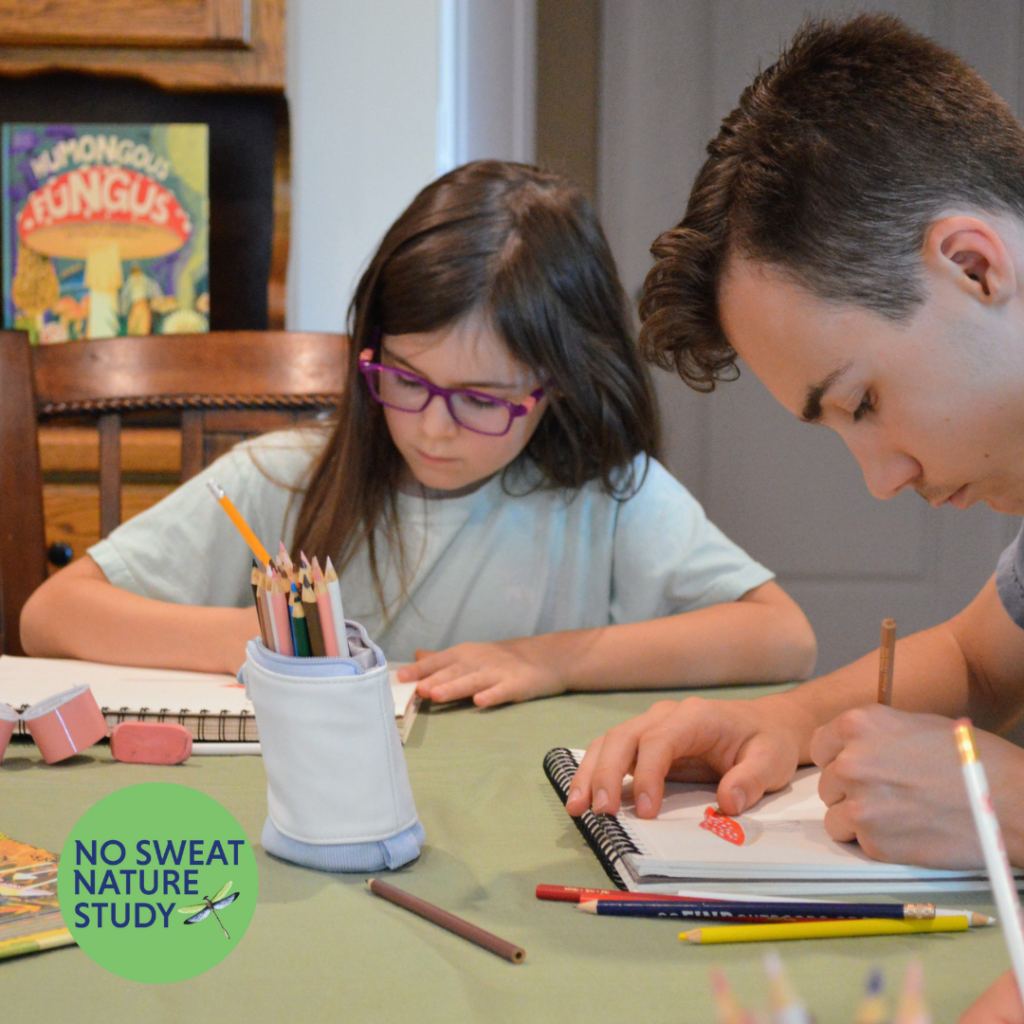
It’s an easy way to keep science moving without having to plan and teach every lesson yourself.
Make Science Meaningful and Fun
Experience a free No Sweat Nature Study class to see how easy and engaging science can be.
Kid-friendly science through the lens of nature study
Creative nature journaling with every lesson
Flexible and fun for the whole family