
Why did Ben Franklin ask so many questions?
Ben Franklin nature study is such a fun way to help children connect history, science, and curiosity. In this episode of the No Sweat Nature Study Podcast, children learn how Benjamin Franklin’s observations and experiments helped scientists understand lightning and electricity. They also discover why asking thoughtful questions is such an important part of science and nature study.
This episode shares how Benjamin Franklin used curiosity, observation, and experimentation to better understand the world around him. Listeners discover fascinating facts about lightning, electricity, inventions, and the kinds of questions that often lead to scientific discovery.
Ben Franklin Nature Study
After listening to the podcast episode, use these simple questions to review what your children learned.
- What did Ben Franklin wonder about when he observed lightning? (He wondered whether lightning and electricity were the same thing.)
- Why are thunderstorms dangerous to experiment with? (Lightning can seriously hurt people, so storms should only be studied safely.)
- What does it mean to conduct electricity? (It means electricity can move through something easily.)
- What kind of glasses did Ben Franklin help develop? (Bifocals.)
- Why did Ben Franklin design a new kind of stove? (To help homes stay warmer while using less wood.)
- What are lightning rods used for? (They help direct lightning safely into the ground to protect buildings.)
- What habits did Ben Franklin use that are important for scientists? (He noticed problems, asked questions, and experimented with solutions.)
- What are some examples of questions nature explorers might ask outdoors? (Why birds become quiet before storms, why flowers open and close, or why squirrels are busier in the fall.)
Ben Franklin Nature Study Video Class
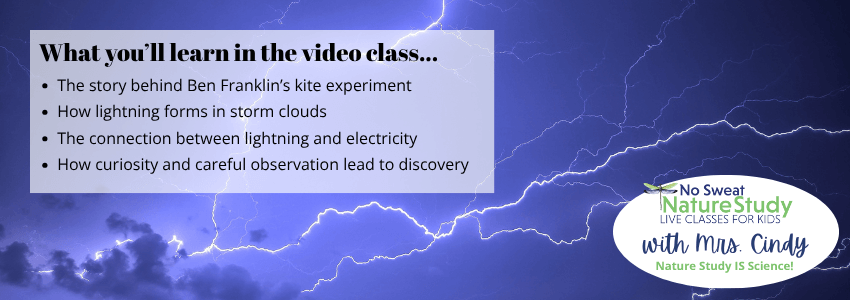
The Ben Franklin’s Lightning video class helps 1st-8th graders understand the science of lightning, electricity, and storms through engaging, nature-based learning. During the class, students learn more about Franklin’s experiments, explore how scientists study weather today, and create meaningful nature journal pages to solidify their scientific understanding.
This class is part of the No Sweat Nature Study membership, which includes a growing library of science-rich nature study lessons covering weather, animals, plants, earth science, and more. Along with the video lesson, members also receive optional extension activities, nature walk ideas, research projects, and curated booklists that make learning both meaningful and manageable for busy homeschool families.
Nature Study Book List
The No Sweat Nature Study Podcast community has been sharing recommendations of excellent nature-themed books. Click here to find a compilation of listener favorites!
Would you like to record a voicemail to answer this season’s nature study question?
Visit the podcast page and scroll to the bottom to find the voice recorder.
Please leave a rating or a review on your podcast app! It helps the podcast to show up for more people…which means more families can enjoy science through the wonderful lens of nature study! Thank you!
Make Science Meaningful and Fun
Experience a free No Sweat Nature Study class to see how easy and engaging science can be.
Kid-friendly science through the lens of nature study
Creative nature journaling with every lesson
Flexible and fun for the whole family