
Pumpkin School: Math and Science Activities for Autumn
Can you imagine using pumpkins to teach math, science, geography, history, AND language arts? You can do just that while enjoying a fun day of pumpkin school!
Set aside the textbooks for an afternoon or spread these pumpkin math and science activities over several days. With a few simple supplies, your elementary and middle school students can practice familiar skills and investigate some new questions, too.
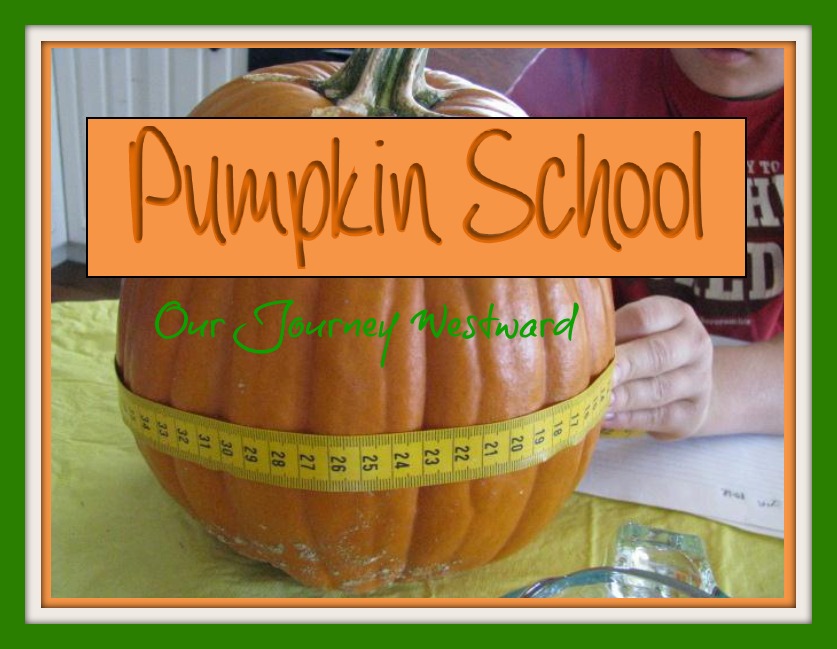
In our homeschool, we have enjoyed one version or another of pumpkin school for years. While you can certainly complete the activities without friends, they are so much fun with a small group. Typically, we invite one or two other families for an entire day of pumpkin-themed learning.
This post contains affiliate links.
Living Math and Science with Pumpkins
Some of these ideas come from my book Loving Living Math. It’s a how-to book for parents that teaches practical ways to include “living” (real life, hands-on, meaningful, conceptual) math in your homeschool.
Pumpkin Math and Science Activities
You don’t have to complete every activity to have a worthwhile pumpkin school day. Choose a few that fit your children, gather your supplies, and enjoy learning together! One pumpkin will work for many activities, but two or more allow for comparisons.
Supplies for Pumpkin School
For the main activities, gather:
- One or more pumpkins
- A flexible measuring tape or string and a ruler
- A scale suitable for weighing your pumpkins
- Paper or nature journals and pencils
- A tray or bowl for collecting seeds
- A spoon for scooping
- A cutting tool for an adult to use
Optional supplies include a calculator, a magnifying glass, a kitchen scale for seeds, and a sturdy board for a low rolling ramp. For the water-displacement activity, you’ll also need a small pumpkin and a container large enough to hold it, with volume markings fine enough to measure the water-level change.
An adult should cut the pumpkins and supervise activities involving ramps or dropping pumpkins.
Choosing Activities for Different Ages
- Younger elementary students: Estimate, count, measure, and compare.
- Older elementary students: Explore fractions, graphs, and averages.
- Middle school students: Calculate percentages, use formulas, solve equations, and plan fair tests.
Children of different ages can investigate the same pumpkin while recording or calculating different things. There’s no need to make this complicated!
Before Cutting: Pumpkin Math and Science
Measure and Compare
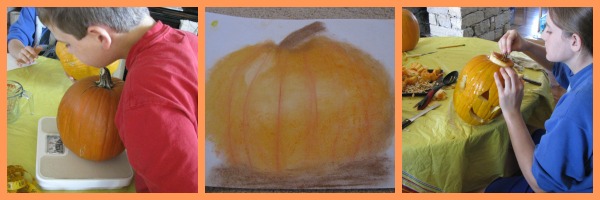
Estimate the pumpkin’s weight, then use a scale to check. How close was your estimate? If you have several pumpkins, predict their order from lightest to heaviest before weighing them.
Measure each pumpkin’s height and widest width. Measure the stem, too. Is the tallest pumpkin also the heaviest?
Measure the circumference by wrapping a flexible tape around the pumpkin’s widest horizontal section. If you’re using string, mark where the ends meet, then straighten the string beside a ruler.
Older students can use the circumference to estimate diameter and radius:
- d=C÷3.14 (that means diameter = circumference ÷ π)
- r=d÷2 (that means radius = diameter ÷ 2)
These formulas describe circles. Because a pumpkin’s cross-section may not be a perfect circle, the answers are approximations. Compare the calculated diameter with your measured width. How close are they?
Look for a flattened or discolored area where the pumpkin rested on the ground. How does that spot compare with the rest of the rind?
Make Pumpkin Graphs
Use the measurements you’ve already collected to make a bar graph comparing your pumpkins’ heights, weights, or circumferences. Choose one measurement per graph and use the same units for each pumpkin.
Label each pumpkin with a letter or number, and record its measurements as you work. You’ll use these numbers for the graphing and average activities below.
- Write your pumpkin labels across the bottom of your graph.
- Add a numbered measurement scale up the side. Start at zero and use equal intervals, such as 0, 2, 4, and 6. Label the scale with the measurement and units, such as “Height in Inches.”
- Draw one bar for each pumpkin, showing its measurement, and give your graph a title.
Which pumpkin has the greatest measurement? The smallest? How much do they differ?
Find Average Measurements
Older students can use the same data to calculate the mean, or average, height, weight, or circumference. Add the values for one measurement, then divide by the number of pumpkins.
For example, pumpkins weighing 4, 6, and 8 pounds have a total weight of 18 pounds. Divide by 3 pumpkins to find an average weight of 6 pounds.
Compare each pumpkin with the average. Which are above it, below it, or exactly the same?
Explore Fractions, Percentages, and Degrees
Count the ribs (the raised sections separated by grooves) around your pumpkin. Use the total to practice fractions of a set. For a pumpkin with 12 ribs, 6 of the 12 ribs represent 6/12, or 1/2, of the total number of ribs.
Older students can convert these fractions to percentages. For example, 3 of 12 ribs represent 25% of the ribs.
The ribs aren’t necessarily the same size, so fractions of the rib count don’t tell us exact fractions of the pumpkin’s surface or volume.
For an angle activity, draw a circle to represent a pumpkin viewed from above. A full circle contains 360°. How many degrees are in one-half or one-quarter of the circle? Students can divide the drawing into equal sections and label the angles.
Try a Pumpkin Algebra Problem
Weigh three pumpkins together and record their total weight. Remove one pumpkin and weigh the remaining two.
Let P represent the weight of the removed pumpkin:
Total weight − P = remaining weight
For example, if the pumpkins together weigh 15 pounds and the remaining two weigh 11 pounds, then 15 − P = 11. The missing pumpkin weighs 4 pounds! Weigh it separately to check.
Investigate Floating and Volume
Predict whether a small pumpkin will float or sink, then test it in water.
Optional challenge for older students: Measure volume. If you have a suitable marked container, record the starting water volume, fully submerge the pumpkin, and record the new volume. Subtract the starting volume from the final volume to find the pumpkin’s volume.
If the pumpkin floats, it must be held entirely underwater. A hand or tool in the water also displaces water and changes the measurement. If you can’t account for that extra displacement, stick with the float-or-sink investigation.
Have Pumpkin Races
Outdoors, roll pumpkins down a low, sturdy ramp onto a clear, level area. Which travels farthest? Which makes the fewest full revolutions over a marked distance?
For a fair comparison, use the same ramp, starting point, and landing surface. Release the pumpkins without pushing, and repeat each trial several times.
Then investigate the ramp itself. Use the same pumpkin and change only the ramp’s incline. Does a steeper ramp change how far the pumpkin rolls? Record your results and look for a pattern.
Inside the Pumpkin: Parts and Seeds
After an adult opens the pumpkin, take time to investigate before scooping everything out.
Observe and Sketch the Parts
Compare the firm outer rind, the flesh beneath it, and the stringy material surrounding the seeds. How do they differ in color, texture, and thickness?
Sketch a cut pumpkin in your nature journal and label the rind, flesh, seeds, and stem. Measure the rind and flesh together at several places along the cut edge. Is the thickness the same everywhere?
Count and Investigate Seeds
Estimate how many seeds your pumpkin contains. Scoop them into a tray, separate them from the stringy material, and count. Groups of 10 make a large collection easier to count!
Compare your estimate with the actual count. If you have several pumpkins, does the largest one have the most seeds?
Examine a rinsed seed with a magnifying glass. Notice its shape, color, and protective seed coat. An adult can help open a seed, or you can soak a few in water to soften the coats before carefully peeling them back. Compare the outside with the softer interior.
Measure several seeds. If you have a sensitive kitchen scale, weigh a group of seeds and divide by the number of seeds to find their average weight.
After Pumpkin School: More Science Investigations
Compare Pumpkin Drops
If you have a safe outdoor space, an adult can drop pumpkins from a low height onto a clear landing area while children observe from a distance. Don’t climb onto roofs or ladders for this activity.
Compare what happens to pumpkins of different sizes. Does one crack while another stays intact? Size isn’t the only possible explanation: ripeness, rind thickness, and the landing surface can affect the results, too.
Older students can investigate whether different-sized pumpkins take different amounts of time to fall. Release two pumpkins at the same time, with their lowest points the same distance above the landing surface. Compare the moment each pumpkin first touches the ground, rather than how long it takes to break apart. Over a short drop, differences may be too small to measure reliably.
Observe Decomposition
Observe a cut pumpkin as it decomposes outdoors in a suitable spot. Sketch changes over time. Keep the investigation away from pets and avoid handling moldy material.
More Subjects to Explore with Pumpkins
Most of these activities involve math and science, but pumpkin school doesn’t have to stop there!
- Geography: Research where pumpkins are grown and label several growing regions on a map.
- History: Read about how Indigenous peoples of the Americas grew and used pumpkins and other squash.
- Language arts: Write a story about pumpkins living together in a patch, or describe your pumpkin using detailed observations.
- Farming: Watch a video about pumpkin farming. List questions you would ask a farmer.
- Cooking: Make a favorite pumpkin recipe. Practice measuring ingredients or doubling and halving amounts. Use fresh pumpkin intended for cooking—not a pumpkin used for dropping or decomposition experiments.
Get a Printable Copy of the Pumpkin Learning Activities
Would you like these ideas handy while you teach? Grab the free Pumpkin School activity printable to keep with your lesson plans. Choose the activities that fit your family and enjoy a day of autumn learning!
Living Books About Pumpkins
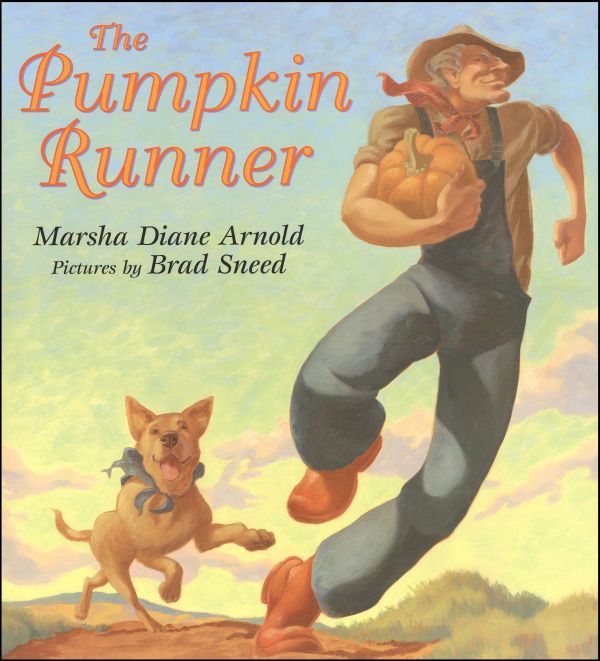
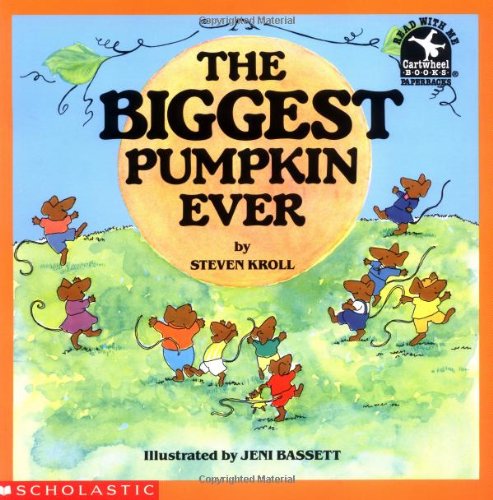
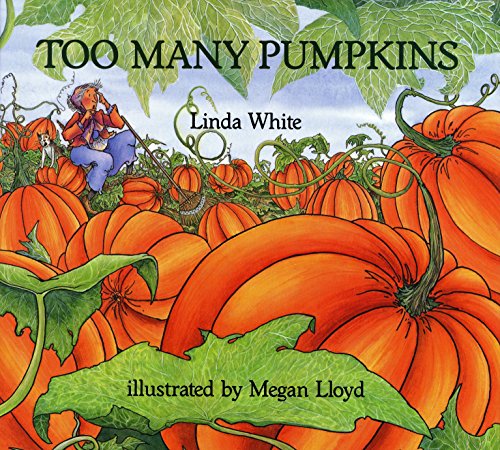
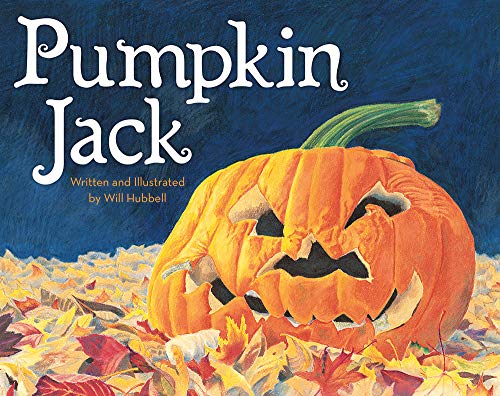
A pumpkin picture book makes a lovely beginning or ending to your pumpkin school day. Many are written for younger children, but older students can enjoy the stories and use them as starting points for discussion or further investigation.
Some of our longtime favorites include:
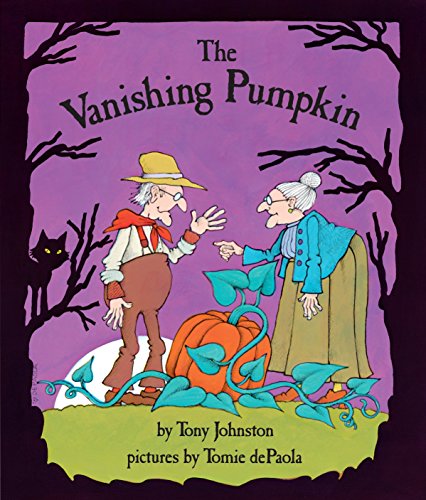
The Pumpkin BookThe Pumpkin RunnerThe Biggest Pumpkin EverToo Many PumpkinsPumpkin JackThe Vanishing Pumpkin
More Fall Nature Study
Keep your autumn investigations going with the Fruits and Nuts NaturExplorers guide! It’s full of ideas for observing and studying fruits and nuts through outdoor exploration and hands-on learning.
Let Me Teach Your Children
Did your children enjoy observing, comparing, and sketching their pumpkins? Those same skills are part of No Sweat Nature Study!
I teach nature-based science classes twice a month to children in 1st-8th grades! We explore science topics together and create nature journal pages to record what we’re learning.
Other Blog Posts You Might Like
Make Science Meaningful and Fun
Experience a free No Sweat Nature Study class to see how easy and engaging science can be.
Kid-friendly science through the lens of nature study
Creative nature journaling with every lesson
Flexible and fun for the whole family
I love this! Thanks for posting!
Thanks for linking up at Homeschool FreeBEE Friday. Pinned to our FreeBEE CoOp board. Great stuff!
This is wonderful!
We are going to the pumpkin patch this weekend.
This is wonderful … I LOVE hands-on math activities! Thanks so much for generously sharing your printable. I featured it as one of the Free Printable(s) of the Day at the Living Montessori Now Facebook page: https://www.facebook.com/LivingMontessoriNow
Fun! We will definitely put some of these ideas to use! Thanks
Such great ideas!
I love these fun pumpkin ideas! Thank you!
You’re welcome. Have fun! 🙂
What delightful ideas! Thank you!
You are very welcome! 🙂