
A Homeschool Learning Center Is a Great Independent Activity
One of my favorite ways to support independent learning is by setting up a simple homeschool learning center. It is nothing fancy and definitely not permanent. It is just a small, welcoming space that invites children to joyfully follow their curiosity.
Learning happens naturally as children browse books, handle tools, engage in simple activities, and revisit ideas again and again. There is no pressure and no checklist. Just an open invitation to learn.
A homeschool learning center can live on a small table, a shelf, a basket, or even a corner of the kitchen counter. What matters most is that the materials are approachable and encourage hands-on exploration.
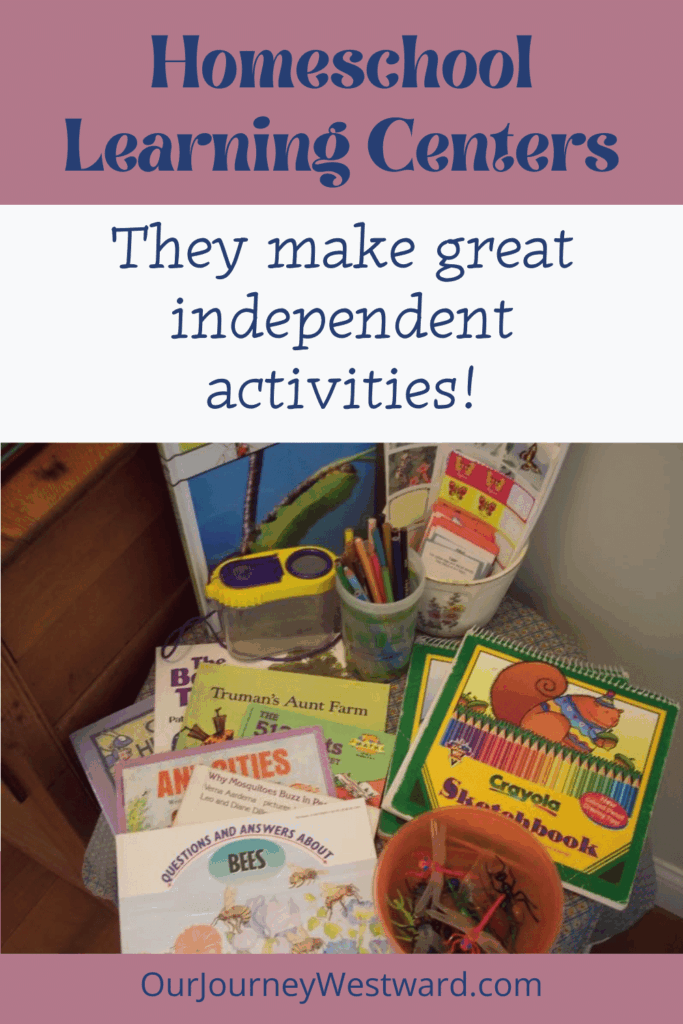
What Is a Homeschool Learning Center?
A homeschool learning center is a dedicated space that brings together books, tools, and simple activities on a single topic. Children are free to browse, observe, read, sketch, build, or investigate whenever they feel drawn to it. There is no attached lesson plan. The learning happens as children explore and play.
For homeschooling families, learning centers work beautifully because they:
- Encourage independent learning
- Allow multiple ages to engage at once
- Make any subject feel inviting
- Support short, meaningful learning moments throughout the day
- Offer something fun to do during long afternoons when schoolwork is finished
- Gently support further investigation of your current studies
Why a Homeschool Learning Center Pairs So Well With Nature Study
Learning centers can be set up for any number of subjects or themes. In the example below, you see a nature-themed table. Since these centers are most used in my homeschool after regular schoolwork, nature themes provide a natural segue to afternoon outdoor time for fresh air and exercise.
Nature study thrives on observation, curiosity, and unhurried exploration. A learning center gives children a place to spark outdoor discovery and deepen learning indoors. It becomes a bridge between outdoor experiences and intriguing reflection.
Children might flip through a book after a walk, sketch something they noticed outside, or examine a specimen more closely. Because the materials are always available, learning happens organically.
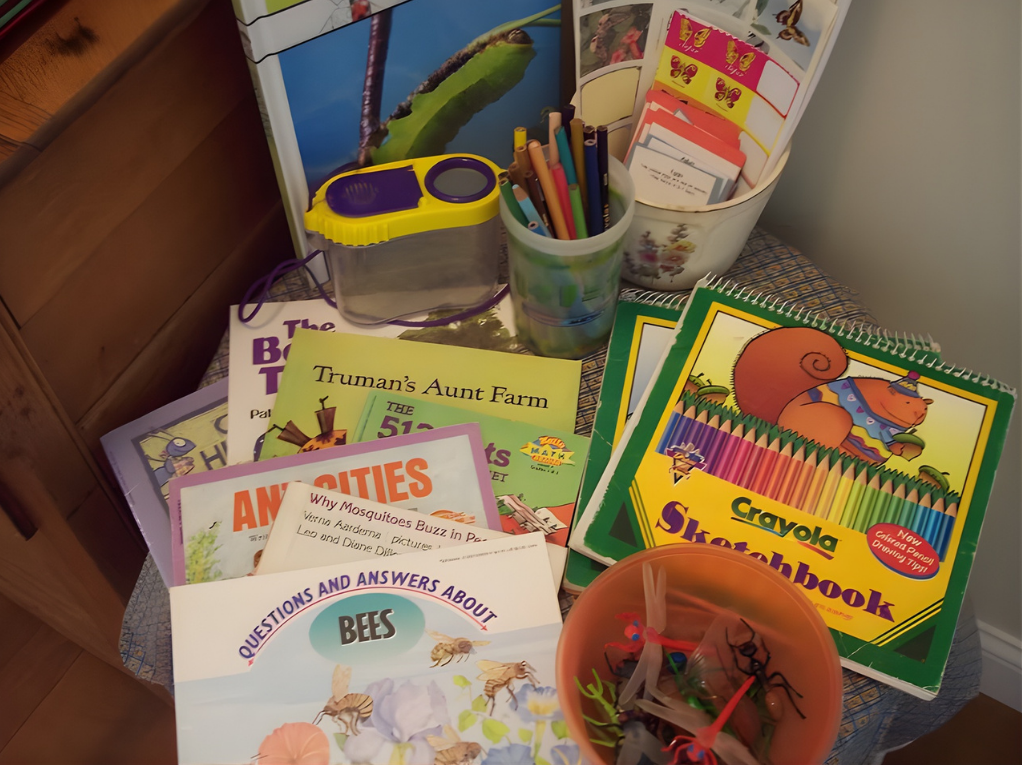
A Closer Look at the Nature Learning Center Pictured
This nature-themed learning center focuses on insects. Everything here invites children to look closely and ask questions.
You might notice:
- A small collection of insect books, both fiction and nonfiction
- Sketchbooks and colored pencils for drawing observations
- A bug box with a built-in magnifier for close viewing
- Plastic insects for hands-on sorting and play
- Life cycle cards for visual reference
- Stickers and simple hands-on materials to keep things inviting
Nothing here requires instructions. Children can choose what interests them most, whether that means reading, drawing, sorting, or simply playing.
I’ll probably change a few of the current items in a couple of days. Maybe adding the Cootie game, some Play-Doh and fun tools for bug sculpting, some insect coloring sheets, and a self-explanatory experiment.
How to Use a Learning Center
There is no right or wrong way to use a learning center. Some days it may be busy and full of activity. Other days, it may sit quietly, waiting to be noticed again. Both are perfectly fine.
You can refresh a learning center by swapping out a few books, adding a new tool, or tying it loosely to something you are noticing outside.
Your displays may have absolutely nothing to do with your current studies, or they may serve as encouraging extensions to what you’re already learning. For instance, after a No Sweat Nature Study class on pond habitats or garden helpers, this insect learning center can encourage a deeper exploration of insects. Hopefully, even prompting more desire to get outdoors for “eyes-on” and hands-on learning.
Seasonal Nature-Themed Learning Center Ideas
If you enjoy rotating themes, here are a few simple ideas that work well throughout the year.
Spring
- Seeds and seedlings
- Frogs and ponds
- Butterflies and moths
- Bird nests and eggs
Summer
- Insects and pollinators
- Weather and clouds
- Shorelines or streams
- Night skies
Autumn
- Leaves and trees
- Pumpkins and squash
- Migration
- Woodland animals
Winter
- Animal tracks
- Evergreens and cones
- Snow and ice
- Winter birds
Each theme can be as simple as a few books, a notebook, and one or two hands-on items.
Start Small and Keep It Flexible
A learning center is not meant to replace your science plans. It is a gentle invitation to notice more, wonder more, and engage with science in a relaxed way.
If you are looking for a low-pressure way to encourage independent nature study at home, a small learning center like this can make a big difference!

Make Science Meaningful and Fun
Experience a free No Sweat Nature Study class to see how easy and engaging science can be.
Kid-friendly science through the lens of nature study
Creative nature journaling with every lesson
Flexible and fun for the whole family
One Comment