
A Literature-Based Apple Unit Study for Homeschooling Families
There’s something about apple season that makes it especially easy to bring learning to life. Maybe it’s a trip to a local orchard, a basket of new varieties to taste, or simply the smell of something apple-y baking in the kitchen.
Apples are also a fantastic jumping-off point for learning! With just a few apples and some good books, you can explore everything from plant science and chemistry to math, history, geography, art, and more.
Whether you want to spend one fun afternoon learning together or stretch the ideas across several days, I’ve gathered plenty of possibilities below. Choose the ones that fit your family and make your apple study your own.
This post contains affiliate links.
Start with a Few Apples
Gather several different apple varieties and start by comparing them. Notice differences in size, color, shape, scent, texture, and taste. Keep the varieties labeled so you can do some investigating later.
Here are a few easy ways to turn those apples into learning:
- Hold a blind taste test. Create categories for sweetness, tartness, crispness, and juiciness. Record the results and graph your family’s favorites.
- Experiment with browning. Place apple slices in lemon juice, salt water, plain water, or other liquids and compare them with an untreated slice. Which treatment slows browning best?
- Do some apple math. Measure circumference and diameter, compare weights, estimate before measuring, or calculate what percentage of an apple remains after the core is removed.
- Research your varieties. Where did each originate? How old is the variety? Was it developed for eating fresh, baking, cider, storage, or another purpose?
- Map your apples. Find the major apple-growing regions of the United States and investigate why apples grow especially well in those areas.
- Add art or nature journaling. Draw several varieties side by side, sketch and label the parts of an apple, or slice an apple horizontally and vertically and compare what you see inside.
Even two or three of these activities can make a wonderfully full afternoon without requiring much preparation.
The Science of Apples
An apple gives you plenty of opportunities for real science beyond simply labeling its parts.
Start with the apple tree itself. Follow its annual cycle from winter dormancy to spring blossoms, pollination, fruit development, and finally harvest. If you have access to an apple tree throughout the year, photograph or sketch the same tree during different seasons and compare the changes.
Apple blossoms also open the door to studying pollination. Which animals visit apple blossoms? Why can’t a tree simply produce apples without successful pollination? Older learners can investigate why many apple varieties need pollen from a different compatible variety nearby.
Then there’s an especially interesting question: Why doesn’t planting a Honeycrisp seed necessarily give you a Honeycrisp apple tree?
That question can lead to a fascinating study of seeds, genetics, apple varieties, and grafting. Commercial growers generally reproduce particular apple varieties through grafting rather than simply planting their seeds. Compare several named varieties and investigate when, where, and why each was developed.
Living books about apples, orchards, pollinators, and plant life cycles can help you take any of these topics further without turning the study into textbook work.


Apple Nature Study
If you can visit an orchard, take advantage of it as more than a place to pick apples.
Notice the shape and spacing of the trees. Look for insects, birds, lichens, fallen fruit, leaves with damage, and evidence of other organisms using the orchard as habitat. Compare younger and older trees. Look closely at the bark and leaves. If several varieties are growing, see whether you notice differences among the trees as well as the fruit.
Ask questions as you explore. Why are orchard trees often much smaller than you might expect an apple tree to be? How are they pruned? What happens to apples that fall and aren’t harvested? Which animals take advantage of them?
No orchard nearby? A grocery-store apple study still gives you plenty to investigate, or you can observe another fruiting tree and make comparisons.
For a much deeper study of fruits, nuts, seeds, trees, and the plants that produce them, the NaturExplorers Fruits and Nuts curriculum includes nature walks, hands-on activities, experiments, research ideas, and more. (This guide contains Christian content.)

Apples in History
Johnny Appleseed fits naturally into an apple study, but his real story is much more interesting than the familiar image of a man wandering around scattering apple seeds.
John Chapman established nurseries as he traveled westward, planting and tending apple seedlings and selling trees to settlers. His story gives you an opportunity to explore westward expansion, pioneer settlements, land ownership, agriculture, and the importance of orchards to growing communities.
Read a good biography of Johnny Appleseed and trace his travels through states such as Pennsylvania, Ohio, Indiana, and Illinois. Compare a map of his travels with maps showing American westward expansion during his lifetime.
Older learners might also investigate an interesting historical question: Were the apples growing in early American orchards the same kinds of apples we usually eat today? The answer can lead to cider production, food preservation, seed-grown apples, and changing agricultural practices.

Johnny Appleseed is also one of the eight naturalists studied in my Famous Naturalists Nature Study Made Easy curriculum.
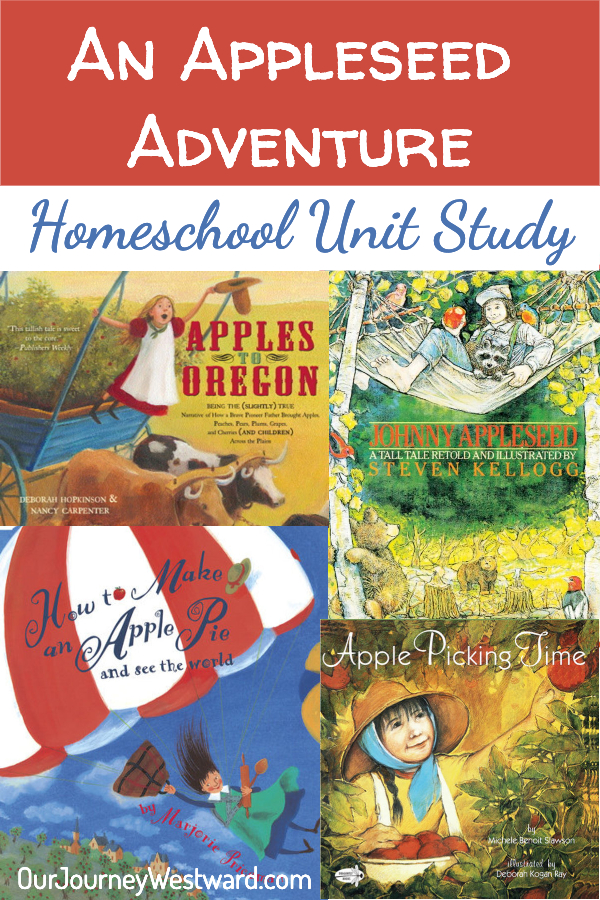
A good picture book biography is an easy way to bring his story into your apple study. Here are some of my favorite Johnny Appleseed books to get you started.


Apple Math That Goes Beyond Measuring
Recipes are an easy way to bring fractions and measurement into an apple study, but you can do quite a bit more.
Buy apples by the pound and have learners calculate the price of individual apples or compare the cost of several varieties. Weigh an apple before and after peeling and coring it and calculate the difference. Compare circumference, diameter, and weight to see whether the largest-looking apple is always the heaviest.
A family taste test can become a simple statistics activity. Have everyone rank several varieties, organize the results in a table, calculate averages for older learners, and create a graph showing the results.
And, of course, baking still counts! Double or halve a favorite apple recipe, work with fractions and conversions, and enjoy the results.
If you’d like more ideas for making math practical and meaningful across your homeschool, you’ll find them in Loving Living Math.


Where Could Your Apple Study Lead Next?
One of the best things about this kind of homeschooling is that you don’t have to decide everything ahead of time. Pay attention to which questions capture your learners’ interest and follow one of them a little further.
Apples might lead you into a pumpkin unit study, a deeper look at westward expansion, or even an Around the USA study through picture books.
Or you can simply eat the last apple and move on to something else.
That’s the beauty of combining subjects around an interesting topic. A few apples can give you a rich afternoon or several days of learning without requiring weeks of planning or an elaborate unit study.
Want to keep the learning going?
There’s a Johnny Appleseed video class waiting in the No Sweat Nature Study library, along with plenty of other classes that are perfect for autumn nature study. Learners can bring their nature journals and learn right along with me while we explore real science together.
Take a look at No Sweat Nature Study and try a free class here.
Make Science Meaningful and Fun
Experience a free No Sweat Nature Study class to see how easy and engaging science can be.
Kid-friendly science through the lens of nature study
Creative nature journaling with every lesson
Flexible and fun for the whole family