
Why do people tell stories about animals? Beatrix Potter Study
Stories about talking animals have been loved for generations, but have you ever wondered why authors use them so often? In this episode of the No Sweat Nature Study Podcast, we look at the connection between storytelling, observation, and Beatrix Potter nature study. You’ll hear how careful attention to real animals helped inspire some of the most memorable children’s books ever written.
Listeners will think about why animal characters make stories feel familiar, how they help writers share important ideas gently, and how imagination can lead to closer observation of nature. This short episode encourages families to look more carefully at the animals around them and even imagine the kinds of stories their busy little shenanigans might inspire.
Beatrix Potter Nature Study
Use these questions to talk with your children after listening to the episode. They’re a great way to review the ideas we discussed and enjoy a thoughtful conversation together.
- Why do authors often choose animals as the main characters in stories? (Animals feel familiar to us, make stories easier to imagine, and help writers share important ideas in a gentle way.)
- How can stories about animals help readers understand real life better? (Animal characters can show friendship, kindness, mistakes, and good choices in a way that feels natural instead of like a lecture.)
- What was one example of a book mentioned in the episode that uses animals to tell a meaningful story? (Charlotte’s Web was mentioned as a story that uses animals to show ideas about loyalty, kindness, and caring for others.)
- How can reading stories about animals make us pay more attention to nature? (Stories can make us curious about how real animals live, move, and survive, which helps us notice more when we see them outside.)
- What made Beatrix Potter’s animal stories feel so real compared to many other stories? (She carefully observed real animals and plants and used what she saw in nature to create her characters and illustrations.)
- Why is careful observation an important part of both nature study and storytelling? (When we look closely at real things, we understand them better, and that makes our drawings, writing, and stories feel more true to life.)
- Can you think of another story you know that has animals as the main characters? What lesson does that story teach? (Answers will vary. Examples might include Winnie-the-Pooh, The Jungle Book, Redwall, or other animal stories with lessons about friendship, bravery, or choices.)
- After listening to this episode, what animal could you watch this week, and what kind of story might you imagine about its shenanigans? (Answers will vary.)
Beatrix Potter Nature Study Video Class
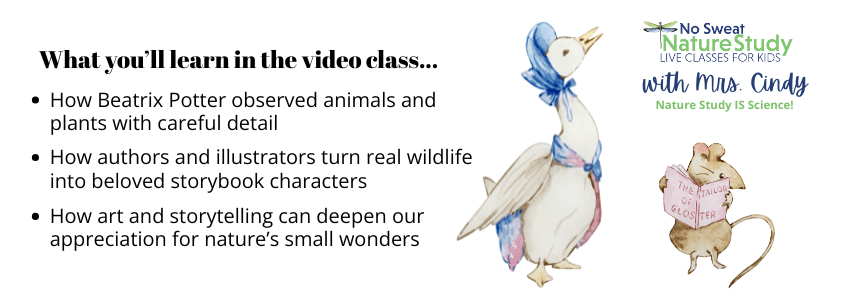
Beatrix Potter’s stories feel so true to life because they began with careful nature study. In the No Sweat Nature Study video class about Beatrix Potter, students learn how her close observation of animals and plants inspired both her artwork and her storytelling, and they create a nature journal page using the same blend of observation and imagination.
This lesson brings together literature, art, and nature study in a meaningful way, encouraging children to notice the small details in the plants and animals around them.
You can also enjoy a free No Sweat Nature Study video class about symbiosis. This lesson is a fun introduction to the video classes and teaches how living things depend on one another in nature.
Would you like to record a voicemail to answer this season’s nature study question?
Find the voice recorder here.
Please leave a rating or a review on your podcast app! It helps the podcast to show up for more people…which means more families can enjoy science through the wonderful lens of nature study! Thank you!
Make Science Meaningful and Fun
Experience a free No Sweat Nature Study class to see how easy and engaging science can be.
Kid-friendly science through the lens of nature study
Creative nature journaling with every lesson
Flexible and fun for the whole family