
Can a Tomato Be Cube-Shaped?
A cube-shaped tomato is used as a simple way to introduce a GMO nature study topic in the No Sweat Nature Study Podcast. Mrs. Cindy talks about how tomatoes grow, why they are usually round, and how fruit shapes form as plants develop.
The episode explains why tomatoes do not naturally grow into cube shapes and how people have changed plants over time by saving seeds from certain plants. It’s an exciting way to introduce kids to selective breeding!
GMO Nature Study Podcast Comprehension Questions
Use these questions to check your child’s understanding after listening. They can be answered directly from what was shared in the podcast.
- What shape do tomatoes usually grow into, and why do they grow that way? (They usually grow round because of how their cells develop as the fruit grows on the vine.)
- Why would you not expect to see a cube-shaped tomato growing naturally in a garden? (Because tomatoes do not naturally form flat sides or sharp corners as they grow.)
- Have scientists or gardeners ever found a tomato that naturally grows into a perfect cube? (No, there are no known tomato varieties that grow into true cube shapes on their own.)
- What is one method people have used to make tomatoes appear cube-shaped? (They have grown tomatoes inside cube-shaped molds.)
- What is selective breeding, as explained in the episode? (It is when people save seeds from plants with traits they like and grow those seeds again.)
- What are some plant traits people might choose when saving seeds? (Traits like size, shape, color, or flavor.)
- How long have humans been selecting traits in plants? (People have been doing this for thousands of years.)
- What is DNA, according to the episode? (DNA is the set of instructions inside living things that helps them grow and function.)
GMO Nature Study Video Class
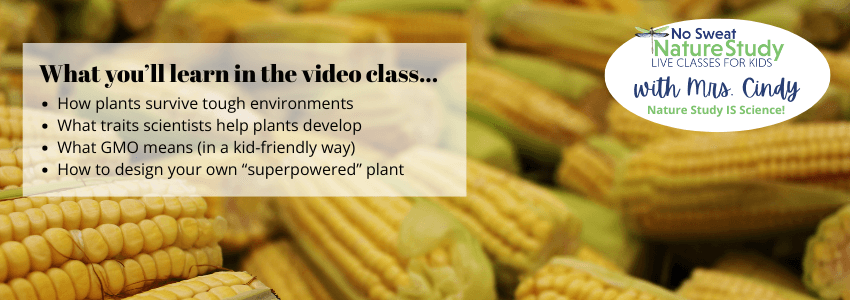
The companion No Sweat Nature Study video class helps students understand what GMOs are by looking at how people have worked with plants over time, from saving seeds to using modern science tools. Students examine plant traits, DNA, and human influence in a way that connects science, history, and everyday food, without any controversy.
This class is included in the No Sweat Nature Study membership, which offers nearly 200 science lessons for elementary and middle school students. Families can join the membership and access the full video library at NoSweatNatureStudy.com.
Free Nature Observation Printable Packet for All Seasons
The No Sweat Nature Study Podcast community has been sharing recommendations of excellent nature-themed books. Click here to find a compilation of listener favorites!
Would you like to record a voicemail to answer this season’s nature study question?
The voicemail box is currently closed. A brand-new call-in question will be available soon!
Please leave a rating or a review on your podcast app! It helps the podcast to show up for more people…which means more families can enjoy science through the wonderful lens of nature study! Thank you!
Make Science Meaningful and Fun
Experience a free No Sweat Nature Study class to see how easy and engaging science can be.
Kid-friendly science through the lens of nature study
Creative nature journaling with every lesson
Flexible and fun for the whole family