subscribe to the RSS Feed

Wednesday, February 8, 2012

Nature Study in the Winter

Posted by Cindy on February 3, 2012

Brrrr – it’s cold outside!

Winter is in full swing. This might seem like a silly time to suggest taking a nature walk, but creation doesn’t stop singing just because the temperatures are cold! In fact, winter is an awesome time for viewing things that we might miss other times of the year.

Besides studying the obvious topics of snow, ice and frost, an entire world of nature excitement awaits this season. Bird’s nests, burrows, rocks, animal prints, and the intricacies of a tree or bush are all things that are much easier to observe during winter when leaves have fallen and plants have died. During a winter walk, challenge your children to find at least ten things that would be much harder to see or find during the summer months.

Notice how landscapes and views from the top of a hill are different this time of year. Discuss with your children how colors, shadows and animal activity have changed from only a few short months ago. Views from this vantage point are perfect for sketching in a nature journal, too.

Winter is also the perfect time to observe conifers (evergreens) and compare them to deciduous trees which have lost their leaves. Your child can create comparison charts and drawings, or complete mini-dissections on conifer needles and cones.

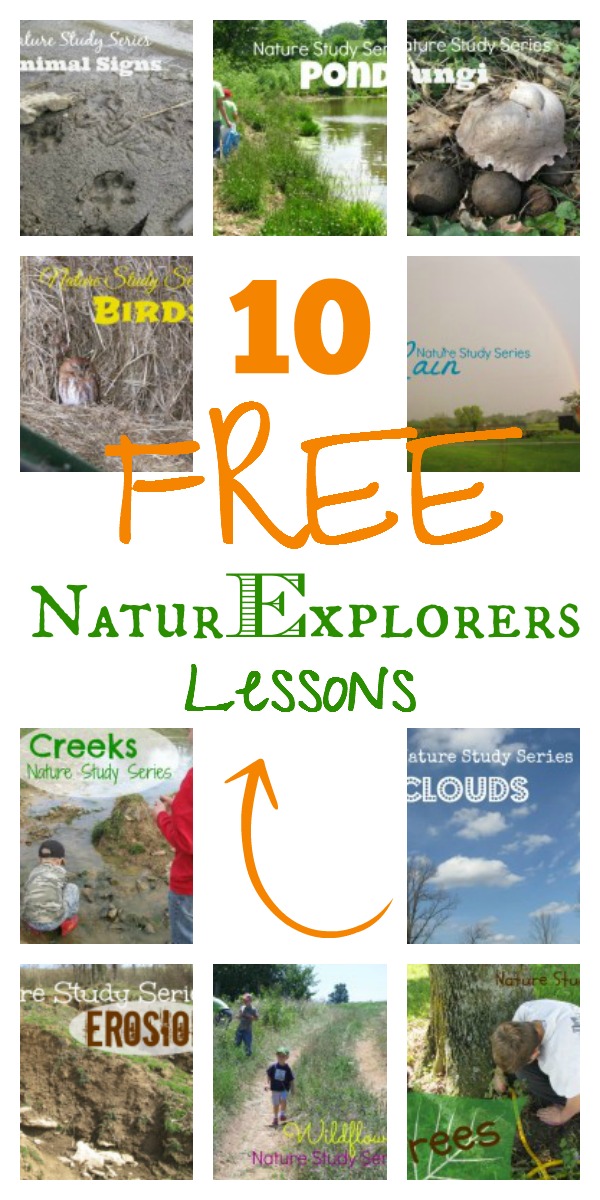
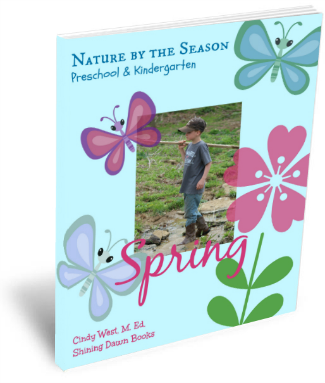
Believe it or not, the ideas above only scratch the surface of exciting nature study opportunities during the winter!  If you’re hoping for loads of more ideas for both outdoor and indoor nature (aka science) studies for this season, you might consider one or more of the following NaturExplorers studies: Snow and Ice, Coping with the Cold, Constant Conifers, Animal Signs, Beautiful Birds or Hard as a Rock.  NaturExplorers studies were written with the 1st-8th grader in m ind, but include extensions for high school students, as well as fun ideas for preschoolers.  Since so many customers asked, I recently released a winter study called Nature by the Season written specifically for preschoolers and kindergarteners.

But, why study nature?

So many homeschoolers are interested in the idea of nature study, but never take the time to actually incorporate it into their homeschool.  Many of them feel like nature study is one of the “extras” that’s all too difficult to fit into the schedule of “important” lessons.  Or, worse, some feel like nature study isn’t even worthy of being an “extra”.

From my experiences, nature study has actually opened the doors to many of our “important ” lessons!  Science takes on a fresh perspective as we learn outdoors and becomes invigorating in the naturally hands-on atmosphere.  Nature study covers biology, botany, earth and space sciences in great detail – and more times than you might imagine physical science and chemistry.

Think of nature study as a wonderful science lab – free of charge!  Instead of reading in a boring textbook about the life cycle of a flower, for instance, children actually observe life cycles time and time again.  These real-life experiences are powerful, yet gentle lessons that help children internalize a great wealth of knowledge.

Besides the subject of science, it’s super-easy to integrate art, writing, geography, and even history and math into nature study lessons.  As children paint a tree in a nature journal, write a spontaneous poem about blue jays, sketch a quick map of a trail, or calculate measurements, other subjects seamlessly “happen”.  In fact, one joyful afternoon of nature study has often allowed me to check off several completed subjects in my lesson plan book!  (The NaturExplorers studies give you many creative ideas for integrating several subjects into nature walks.)

As icing on the cake, nature study allows for time spent together as a family, fresh air and exercise.  And, above all for my family, taking time to enjoy God’s creation is a super way to draw us closer to the One who made it!

So, what are you waiting for?  Go take a hike today!


Fossil Study and Rock Resources

Posted by Cindy on November 30, 2009

November proved to be a great time of the year for a rock study!  We learned about rocks and minerals, life under rocks and even had great luck finding fossils in rocks.

What are fossils?  They’re remains of plant or animal life from the past.  As the song from Buddy Davis from Answers in Genesis goes…”billions of dead things buried in rock layers, laid down by water, all over the earth.”  Finding fossils is like a treasure hunt!  Here in Central KY, we don’t have to go far to find wonderful fossil examples…

The shells are easy to see, but can you find the coral in the bottom right corner?

This picture is harder to see, but there are bone-like fossils in the middle and near the bottom.

The coral is easy to see in the middle of this picture!

I’d love to see pictures of fossils you find in rocks!

Below are some of the resources we used this month.  December will be focusing on Animal Signs.  I may or may not put up resources in the sidebar since December is such a busy month.  If not, I’ll be sure to add Conifer resources in January!

Photobucket

Photobucket

Photobucket

Photobucket

Photobucket

Photobucket

Nature Study – Pond Resources

Posted by Cindy on November 1, 2009

What a wonderful month studying ponds!  Here are the resources that have been in the sidebar.  November = rocks!
Photobucket

Photobucket

Photobucket

Photobucket

Photobucket

Pond Comparisons and Call for CM Carnival

Posted by Cindy on October 26, 2009

Last week’s nature study compared a new pond structure to the older ponds we have been studying.

The kiddos observed the differences in plant life, animal life, general activity and sounds.

We also compared how the new pond was man-made, while the others we have observed were natural depressions in the land.  You can see the bank created to hold in water in the picture below.

One of the old ponds we studied was fed by a constant stream and another by a spring from underground.  This one, however, is fed only by water run-off after rain.  You can see the sloping land above the pond in the picture below.  The space for this pond was chosen specifically for all the run-off potential.

Besides many of the more obvious differences in fewer plants and animals, there was far more erosion taking place on this new pond that isn’t protected by plant growth yet.  We talked about how this pond is being used frequently by cattle, which means plants will have a difficult time settling near the bank.  This led to some super discussions of water conservation from the perspective of a farmer.

With very little to get in the way, this is a GREAT pond for skipping rocks!  And my kiddos spent lots of time practicing their skills!

Speaking of nature study (or art, poetry, narration, handicrafts, character training, mother culture, short lessons, living literature, composers, etc.)  I need submissions for next week’s Charlotte Mason Carnival!!  There have been MANY submissions already, but unfortunately, only TWO that aren’t “junk submissions”.  So get your creative fingers typing and pass along your posts to the carnival by visiting the SUBMISSION PAGE.  Pretty please!

Pond Plants

Posted by Cindy on October 14, 2009

Our nature topic of the month is ponds. We’ve been having so much fun studying plant life, water birds, erosion, pond sources, pond health and so much more! Our most recent trip to a pond focused on pond plants. Below are some pictures of the wonderful finds – even in October!

Algae

Algae

Duckweed

Duckweed

Rush

Rush

We think the foremost plant might be water buttercup.

We think the foremost plant might be water buttercup.

Pondweed

Pondweed

Possibly hornwort

Possibly hornwort

Measuring the perimeter of the pond

Measuring the perimeter of the pond

This particular pond is stream-fed and a stream leads away from it, too.  We followed the stream and the kids decided to build a bridge across with some downed limbs.

This particular pond is stream-fed and a stream leads away from it, too. We followed the stream and the kids decided to build a bridge across with some downed limbs.

Just a little quiet time.  Oh, how I wish there were more!  ;)

Just a little quiet time. Oh, how I wish there were more! ;)

An underwater root

An underwater root

Ideas for learning about pond plants can be found in the NaturExplorers unit Peaceful Ponds.  This unit is currently being revamped, which means the price will go up soon!