
Winter Book List
Our favorite winter books!
Monday, May 20, 2013
My son loves baseball. He’s also excited about his new interest in learning to read. (Thank you, Lord!) So, we came up with a fun way to show his reading achievements – a “book”ball chart. Everytime he reads a book by himself, we’ll add a baseball to the field. We came up with the idea together, so he is very motivated to see the idea work!

This is the title of a workshop taught by Tina Burnell that I attended at the CHEK Convention.
Let me first start by saying, Duh!! I have a master’s degree in education. I’ve studied in depth about teaching reading. I’ve studied in depth about reaching various learning styles. I’ve known for many years that my son learns in an active, kinesthetic, hands-on sort of way. Why did it take me attending an hour-long workshop session to rekindle the idea of teaching my son reading in a different way?? I actually do know the answer to my question. Because this sort of teaching is going to require much more preparation on my part. It’s going to require more of my focused time each day. But, my goodness, it will all be worth it to give him a solid foundation in reading and spelling! So, on to the review of what I learned…, relearned…, refreshed in my mind. Yes, I like that one!
First, let me mention Tina’s Yahoo group. It’s full of ideas, printables, helps, diagnostics……In fact, you may just want to forget reading anything else I’ve written and just go join the group! In case you’re still with me, following are notes from her handouts and notes I took.

“The wise man builds his house upon the rock.”
Learning to read is similar to this. The “foundation” of the “house” being “phonological awareness” – being able to notice, think about and manipulate individual sounds in words. Some examples: rhyming, syllables, understanding that changing letters means changing sounds.
The “walls” built upon the foundation are “phonics”, “vocabulary” and “fluency”. Phonics is understanding the predictable sound/letter connection. Vocabulary is understanding word meanings. Fluency is the ability to read accurately, quickly and with expression.
And the “roof” of the building is “comprehension” – the ability to understand and make sense of what you read.
So, you must start with the foundation – phonological awareness. (This is from me – Teaching with a multi-sensory approach means you are using more than the visual mode of learning. You pull in auditory things (having to do with sound), tactile things (having to do with touch), active things (get the body moving) and maybe even taste or smell. Some children will understand better using one or more of these approaches. Most workbook style curriculums only use the visual method.) Multi sensory activities for phonological awareness would include:
*reading lots of rhyming books (Dr. Suess)
*saying a word and having your child come up with a rhyming word
*finger tapping or clapping out syllables
*using a manipulative such as magnets on a white board to represent letters. For example, write cat. Say cat slowly, emphasizing each sound. You child pulls downs a magnet for each sound heard. This helps them begin to understand that each sound has a special place (or reason) for being in the word.
*using magnet letters (or some other type of letter – even notecards) to make a simple word like “at”, then having your child pull down new letters to add to the beginning to make new words – c-at, h-at, b-at
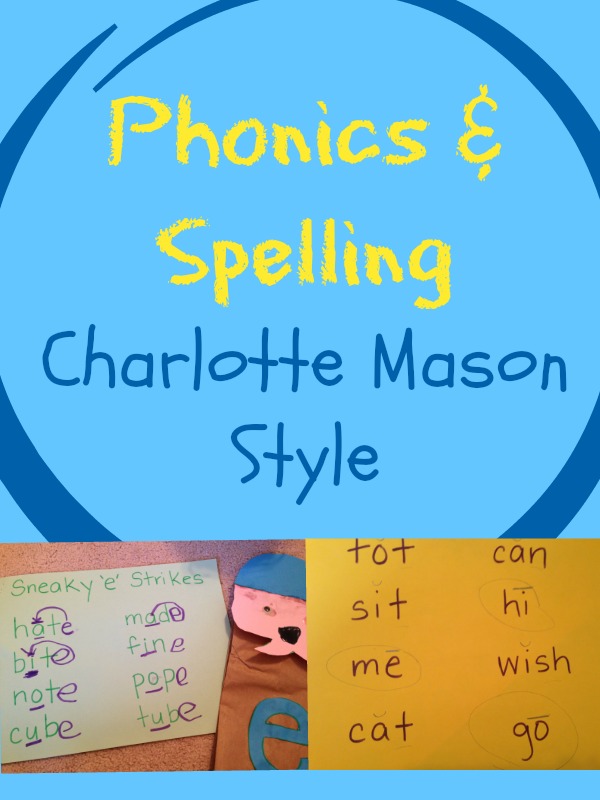
Now, on to phonics to build one of the “walls” of the building. This is where we teach the letters and correspoding sounds. Multi-sensory approaches would include things like:
*pulling down magnet letters on a white board as words are sounded out
*putting red chips under consonants and green chips under vowels as they read a word you’ve written on a white board
*laying letter cards on the floor and having the child jump on the letters when they hear the sound
*making little vowel puppets on popsicle sticks and asking your child to hold up the correct stick when you say a word
*laying plastic screen (from craft departments) over large letters you’ve written on paper and asking your children to trace the letter with their finger. The plastic gives a nice tactile attachment to the letter. This is good for children who have a hard time writing letters correctly, too. It’s the same idea as writing letters in sand or rice or shaving cream, but gives more of a bumpy tactile feel on the top of the finger.
Another “wall” to build is vocabulary. She didn’t go into vocabulary during the workshop. But I think it would include such things as :
*having vocabulary cards and definition cards that the child matches
*vocabulary charades
*drawing a picture of the words
*using a particular word in a sentence and asking your child to guess whether it was used correctly or not
*building play dough creations of vocabulary words
The final “wall” is fluency. She didn’t give multi-sensory ideas for fluency, but said that the #1 way to improve fluency is repeated readings of short passages that are at or below the child’s reading level.
And you top the building off with the “roof” of comprehension. She said children can’t comprehend what they’re reading until the foundation and walls are built. Again, she didn’t give multi-sensory ideas to improve comprehension, but my experience has been that children will easily comprehend when the other “parts” are in place. The biggest stumper to comprehension for a younger child seems to be fluency. As children get older and read more fluently, the biggest stumper in comprehension seems to be unfamiliar vocabulary words or the inability to phonetically break apart long, unfamiliar words.
Tina felt like children needed to be monitored or assessed often in the early days of reading. Here’s a website she recommended for free assessments:
*Don Potter – phonics books, remedial drills, assessments, articles
And finally, she recommended All About Spelling to give your child a solid start to spelling and extra phonics help.
Learning is experience. Everything else is just information. -Albert Einstein
My children pulled all the Miller’s books out again the other day. I can’t tell you how much we’ve enjoyed these books!
Even though the books come from a very conservative Amish-Mennonite perspective, I found them to be very useful in teaching topics like trusting God, manners, friendship, obedience, respect, forgiveness, self-sacrifice and much, much more! Each story centers around a Bible verse and that verse is used at some point within the story. Many of the stories are full of some excitement, too. That helps to keep my son’s attention!
Choosing a favorite is hard, but I would probably choose Missionary Stories with the Millers as my personal favorite. This book is just full of the true adventure stories of actual missionaries. Some I had heard of, some I hadn’t. I have read other reviews that said the stories in this book were a little too much for their younger children, but mine had no problems it. Be warned, though, that the real stories of missionaries aren’t always smily, joyful stories. But in each, God’s faithfulness and care shine through!!
The author, Arnold Ytreeide, is a master storyteller who has woven such an interesting story line that it often left me with my mouth open in awe of his creativity in tying together the story of our Savior’s birth with the story of the main character, Jotham. Set in the days just before the birth of Jesus, you will watch Jotham grow in wisdom and character as he struggles with disobedience and the consequences that follow. Each day’s reading leaving your children begging for more.
I suggest reading the books in the following order:
One note of caution: The books are full of adventure, some in the form of dangerous situations that can be scary to little ears. I would suggest reading them with children who are eight or older.
Love these!
And guess what? An Easter devotional is available, too!