
subscribe to the RSS Feed

Thursday, May 24, 2012

Fungi Study

Posted by Cindy on November 4, 2011

I told you I’ve been slacking on my posts!  Four botany study posts in four days doesn’t mean we’ve been studying botany in such depth every day.  In fact, each topic took us at least a week to cover.  Today’s post is about one of the lessons spent learning about fungi.

Photobucket
After some activities from A Fungus Among Us and Lyrical Life Science, Caleb was asked to go on photo walk.  His goal was to find and photograph as many samples of as he could.  With Eli (our little nature detective) helping, Caleb was able to photograph over 20 fungi varieties!  Below are some of the most interesting photos.

Besides science and photography, this lesson was stretched to include writing and computer skills, too.  I posted last week about the notebooking page he created.

Of course, with boys, a nature walk never ends up being entirely about the topic at hand.  They always find exciting extras…

What nature studies have been keeping you busy this autumn?

Candy Math and Science

Posted by Cindy on November 2, 2011

Got candy?  We do, and we’re having so much fun using it during living math lessons!  This year we added a little science classification to the mix, too.  Fun!  Fun!  Fun!

Math

My preschooler made a concrete graph with his candy.

He had to sort the candy into groups before we could graph them and he created the group names all by himself – gum, chocolate, suckers, crunchy, chewy and hard.

After completing all sorts of averages based on different groupings of the candy, Caleb (6th grade) created this graph using Excel.  (This is another great computer integration activity for those of you who’ve asked me to share more about how we use the computer in our homeschool!)

Science

Not a great picture, but I wanted you to see the entire concrete classification system my 6th grader made with his candy.  {A classification system is otherwise known as a taxonomy, which we compared to the classification system for plants and animals.}

Beginning with the main group of ‘candy’, Caleb decided how to break the large group into two smaller groups. He came up with ‘chocolate’ and ‘non-chocolate’ as his descriptions.

For each new category, he continued breaking the groups down into two new categories until he ended up with each specific type of candy in it’s own pile.

Finally, we walked through each candy’s “classification”. An example from our taxonomy chart -Candy; chocolate; bright wrappers; made with peanuts; made with peanut butter, crunchy, Butterfinger. Besides being a science activity, this also fits into the category of logic!

Check out some other candy math lessons we’ve posted in the past, too!

Conifer Study

Posted by Cindy on

Caleb (and Eli) and I have been so loving our study of botany!  This post highlights one of our activities as we learned about gymnosperms, particularly conifers.

Gymnosperms are plants with “naked seeds” that aren’t housed inside a fruit.  Conifers (cone-bearing plants) are an example of a gymnosperm.

During this lesson, we had collected various twigs and cones from trees at our local cemetery.  We don’t have very many conifers at all on our farm, but the cemetery has several varieties.  We tried to only to collect specimens that had already fallen off the trees or seems to be part of a dying branch.

We compared the leaves of different trees. How were they alike/different? How were they attached to the twig?

We identified the parts and observed their characteristic and functions.

We pulled apart cones as an informal dissection. We were looking for seeds inside the cones, but all ours had already dropped their seeds.

Cones close in cold, wet weather to protect the seeds. We placed open cones in cold water and watched as they completely closed after a few hours.

Conversely, cones open in warm, dry weather. We set cones that were tightly closed in a 250 degree oven for an hour or so and watched as they opened completely.

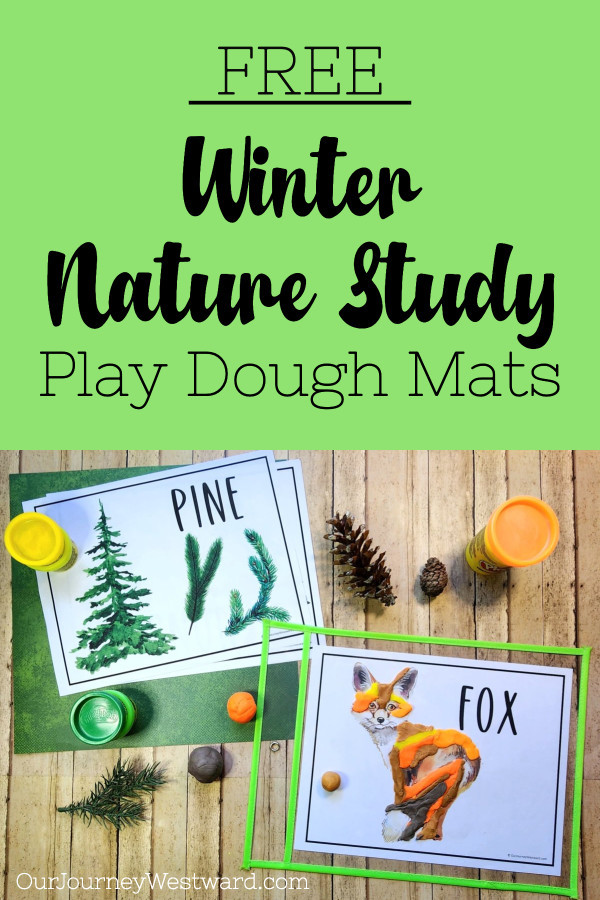
While this wasn't part of the same lesson, our weekly art lesson used conifer samples as models for some practice with pastels.

If you’d like to find all sorts of detailed lesson ideas for studying conifers, check out the NaturExplorers study, Constant Conifers!

Photobucket

Studying Trees

Posted by Cindy on November 1, 2011

In continuing our middle school botany study, we’ve been studying trees.  A lot.  Most of the activities we’ve done have come from the Delightful Deciduous Trees NaturExplorers study.

One super-interesting nature walk activity was finding the tap root (main root that grows straight down), lateral roots (large roots that grow outward or laterally) and fibrous roots (fine roots that grow downward from the lateral roots) of trees.  We took a walk near a creek where we were likely to see root systems due to erosion.  Our findings were way cool!

Exposed roots were everywhere making it easy for us to make plenty of observations.

As we walked the dry parts of the creek bed, we were able to find shelves of erosion showing grass and wildflower roots from above, too!

(The Everchanging Erosion NaturExplorers study would be great for this topic, too.  I’m just sayin’.  ;) )

After plenty of experiences along with lots of living science literature, I gave Caleb a “test” of sorts.  He had to complete the file folder report below to prove his knowledge of trees.  (The file folder template came from Easy File Folder Reports, Grades 3-6.)  As a review before the “test”, I had him read a wonderful little book called A Tree is Growing by Arthur Dorros.

And I can’t forget the ever-so-interested preschooler who loves to be part of our botany lessons.  He gathered some leaves on our walk and created some simple, but pretty, leaf prints when we returned home.

Pumpkin Math

Posted by Cindy on October 31, 2011

We always enjoy a living math lesson with pumpkins!  All our children participated according to their abilities – from the 4yo to the 14yo.  The 11yo and 14yo were expected to measure with complete accuracy, while the 4yo dabbled in learning how to measure.  He used standard (rulers) and non-standard (blocks) measuring tools.

We measured the height and width of each pumpkin.

We measured the weight with our bathroom scale. A nice kitchen scale (which we don't own) would've provided more accurate measurements.

We measured the circumference and the big kids used formulas to determine the diameter and radius.

Here's the beginning of Mahayla's record keeping.

When Eli saw his big brother and big sister keeping records, he insisted that he have a record keeping sheet, too. W = wide and T = tall.

We did a water displacement activity to find the volume of our pumpkins (you'll see below), but we didn't have a big enough container marked with measurements to make the pumpkin displacement accurate. To demonstrate the correct way to find volume, we used a measuring cup and potato. At least this gave them a better idea what we were doing wrong in measuring the volume of our pumkins.

In measuring the volume of our pumpkins, we made our own measurement bucket for estimations, but realized our measurements probably were not perfect, nor could we see through the bucket to see exact water levels. At least they have the experience and understand the flaws in our trial.

Of course, we couldn't end the lesson without carving our pumpkins! Through this process, we continued to measure width of the skin, depth of the cavity, and such. We also talked "science" as we discussed the pumpkin parts and their functions.

And, we couldn't end the lesson without a pumpkin treat. These are simple pumpkin bars that are so moist, they don't even need icing!

I hope you’ll find a few leftover pumpkins at the market and have your own living math lesson!