subscribe to the RSS Feed

Thursday, May 24, 2012

Teaching Pi

Posted by Cindy on March 12, 2012

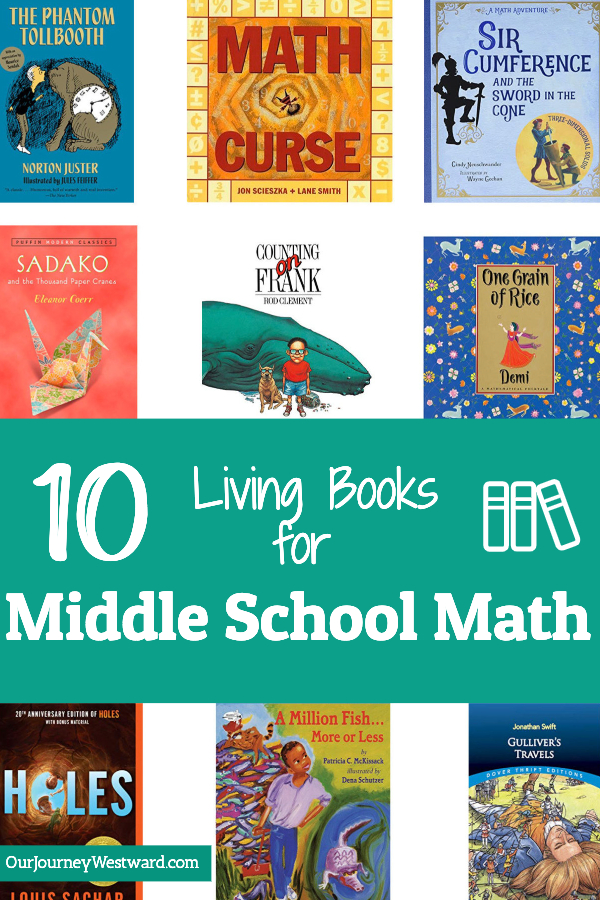
Did you know March 14 is Pi Day?   Celebrate with some living math fun!  If you can get your hands on Sir Cumference and the Dragon of Pi, it makes a great starting point to the celebration.

A lesson idea:  This lesson is a quick and easy way to demonstrate Circumference = 3.1416 x diameter.  Taking several sized lids, I asked the kiddos to trace five different lids on a piece of plain legal-sized paper. Using a centimeter tape measure, I asked them to measure the circumference and diameter of each lid and jot that down on their papers beside the appropriate drawing.

Using their measurements, I held my fingers on the tape measure to show the circumference and diameter of each lid. I asked them to think about what they noticed that was similar about each of the measurements. (The diameter is always about 1/3 of the circumference. You can show this by folding the tape measure in thirds each time.)

Once they saw this “almost 1/3″ measurement concretely, I told them there was a way to figure out the circumference accurately every single time. All they need to know is the diameter of the circle. I secretly held a calculator and asked them to give me the diameter of several of their lids. I would multiply the diameter by Pi (3.1416) and get their circumference measurement every time.

This, piqued their interest of course, and they couldn’t wait to find out the magic trick. So, I showed them the formula  (C = ╥ · d) and allowed them to use the calculator to find several circumference measurements around the house.  It was a great lesson inspired from Family Math, pg. 97!

Photobucket

Other lesson ideas:

These are mostly appropriate for middle school and older children, but be sure to check them out even if you have an upper elementary student.

  • Best Pizza Buy – money comparison activity(at the bottom of the PDF), plus another worthy idea or two
  • Let Them Eat Pi – scavenger hunt, trivia research fun, cake activity and more

Tell me about your Pi Day activities!

M&M Math

Posted by Cindy on February 20, 2012

Talk about a fun week of math learning with M&M’s!  Below you’ll find all sorts of activities we have done with M&M’s.  Most of the ideas could easily be used with other types of candy pieces, too.

Estimation: Fill a jar with M&M’s and ask your children to estimate how many they think are in the jar. The older the child, the bigger the jar should be.

Sorting: Place a pile of M& M’s in front of each child and have them sort the candy into color groups. Older kids can sort according to various attributes, like colors containing red vs. those not containing red, for example. Let them sort as many times as they can think of a new attribute.

Counting: If you have younger children, count and tally the various color groups of M&M’s.

Add/Subtract/Multiply/Divide: Depending on the age/ability of your children, offer various operational problems to your children.

Red + Green =

R + G =

(R + G) x (Y – Bl) =

2(R + G) x 3(Y – Bl) x 12 =

Fair Shares and Division: Invite several stuffed animals over for a party. Divide the M&M’s into fair shares and determine if there are any remainders. Do this several times with varying numbers of “guests”.

Multiplication Arrays: Use the M&M’s to build multiplication arrays. (Not sure what an array is? Visit this site.)

Word Problems: If you have younger children, give oral word problems like, “You have three blue M&M’s and six yellow M&M’s. How many do you have altogether?”  Use the M&M’s as manipulatives.

Older children should use the M&M’s to make up their own written word problems.

Mean, Median and Mode: A pile of M&M’s is a great opportunity to practice finding averages, middle numbers and the number occurring most often.

Fractions, Decimals and Percents: Use the pile of M&M’s to decide the fractional part of each color of M&M as compared to the entire group. For example, if you have 5 red M&M’s out of a total group of 25, the fraction would be 5/25 – reduced to 1/5. Transfer the fractions to decimals and percents, too.

Graphing: Make pictographs, bar graphs, comparison graphs, pie graphs, graphs made in a spreadsheet program on your computer. One or all, graphs are great fun. Find a printable M&M’s bar graph here.

Measurement: Use the M&M’s as measuring tools to find the length, width, circumference, radius, perimeter and/or area of various items around the house.

I’d say that’s just about enough math to rival any textbook curriculum for a week, don’t you?

I found some fun sites with other ideas for using M&M’s in your homeschool classroom.

And here are a few books that relate to candy math.

Candy Heart Valentine’s Day Math Printables

Posted by Cindy on January 23, 2012

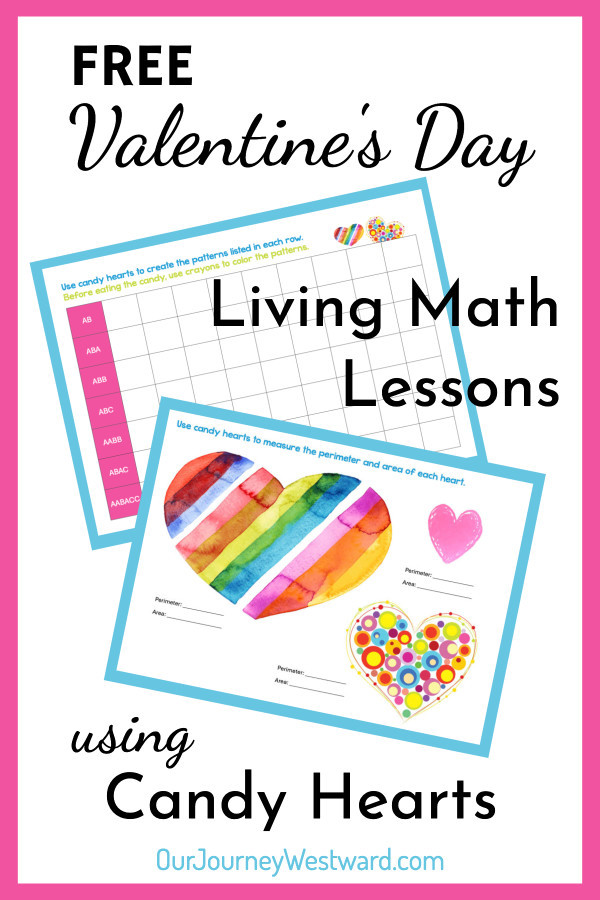
A year or two ago, I created a couple of Valentine’s Day printables for you to enjoy with your children.  I thought I’d remind you about them since V-Day is just around the corner.  Simply click on the graphics to download. :)

The Measure of a Heart uses candy hearts to practice measuring perimeter and area.  After finishing the worksheet, use your candy hearts to measure the perimeter and area of other things around the house.

(In case you need to know…Perimeter is the measurement around an object and area is the measurement of an object’s surface.  To measure the perimeter of the hearts on the worksheet, place candy hearts around the edges of the hearts – the dark lines – and count how many it takes to go all the way around.  To measure the area, see how many candy hearts will fit inside the hearts on the worksheet.)

The Candy Pattern worksheet (which didn’t transfer to a jpg well and is MUCH nicer in the PDF download) allows your child to make various patterns using candy hearts.

(In case you need to know…each of the letters on the worksheet (A, B, C) represent a different colored candy heart.  So, for instance, an ABA pattern, where A represents pink and B represents green would look like: pink, green, pink, pink, green, pink, pink, green, pink.  Your child gets to decide which colors represent each letter of the pattern.)

You can find several other fun math related V-Day ideas at Googol Learning.

I’ve been pinning fun ideas on my Valentine’s Pinterest board, too!

For those of you interested in learning how to add more living math into your homeschool, consider Loving Living Math.

Photobucket

Positive Negative Symmetry Art

Posted by Cindy on January 19, 2012

An art lesson that promotes mathematical thinking – oh joy.  With the main focus being on the art concept of positive and negative space, throwing symmetry into the mix gave a nice extra punch to the lesson.

Positive space is the area on a piece of art which the subject occupies, while negative space is the area around the subject.  You can see in this symmetrical example that the positive space is the pink on the left, but changes to yellow on the right.

The method is quite simple.

1. Find two contrasting colors of the same sized paper.

2. Fold both papers in half to establish the line of symmetry.

3. Set one paper aside.

4. Cut the 2nd piece of paper in half on the fold you just made.  Discard one of the halves.

5. Draw 1/2 of a shape.  (Like you would do if you were making paper hearts and planned to open the paper up once the heart was cut out.  Except, in this case, you’ve already discarded the other half.)

6. Cut out your shape, keeping all pieces.

7. Place the positive space pieces on one side of the line of symmetry on the 2nd sheet of paper.  Place the negative space pieces on the other side.  Situate all the pieces so that they meet the line of symmetry perfectly and match up with one another.

8. Glue.

This lesson was inspired by Dick Blick and is one of the many integrated math and art lessons I’ve pinned on my Living Math Pinterest Page!

(Sorry, not the best photo, but I wanted you to see the possibilities.)

Candy Math and Science

Posted by Cindy on November 2, 2011

Got candy?  We do, and we’re having so much fun using it during living math lessons!  This year we added a little science classification to the mix, too.  Fun!  Fun!  Fun!

Math

My preschooler made a concrete graph with his candy.

He had to sort the candy into groups before we could graph them and he created the group names all by himself – gum, chocolate, suckers, crunchy, chewy and hard.

After completing all sorts of averages based on different groupings of the candy, Caleb (6th grade) created this graph using Excel.  (This is another great computer integration activity for those of you who’ve asked me to share more about how we use the computer in our homeschool!)

Science

Not a great picture, but I wanted you to see the entire concrete classification system my 6th grader made with his candy.  {A classification system is otherwise known as a taxonomy, which we compared to the classification system for plants and animals.}

Beginning with the main group of ‘candy’, Caleb decided how to break the large group into two smaller groups. He came up with ‘chocolate’ and ‘non-chocolate’ as his descriptions.

For each new category, he continued breaking the groups down into two new categories until he ended up with each specific type of candy in it’s own pile.

Finally, we walked through each candy’s “classification”. An example from our taxonomy chart -Candy; chocolate; bright wrappers; made with peanuts; made with peanut butter, crunchy, Butterfinger. Besides being a science activity, this also fits into the category of logic!

Check out some other candy math lessons we’ve posted in the past, too!